For more than a decade, the UK has broadly agreed on the direction of travel for surface water management. Policy documents reference it. Guidance supports it. Demonstration projects prove it. Designers increasingly understand how to deliver it.
And yet, across much of England, nature-based Sustainable Drainage Systems (SuDS) are still often delivered through planning negotiation rather than embedded as a baseline assumption.
The question is no longer whether SuDS are desirable, it’s why they remain discretionary.
The risk profile has already changed
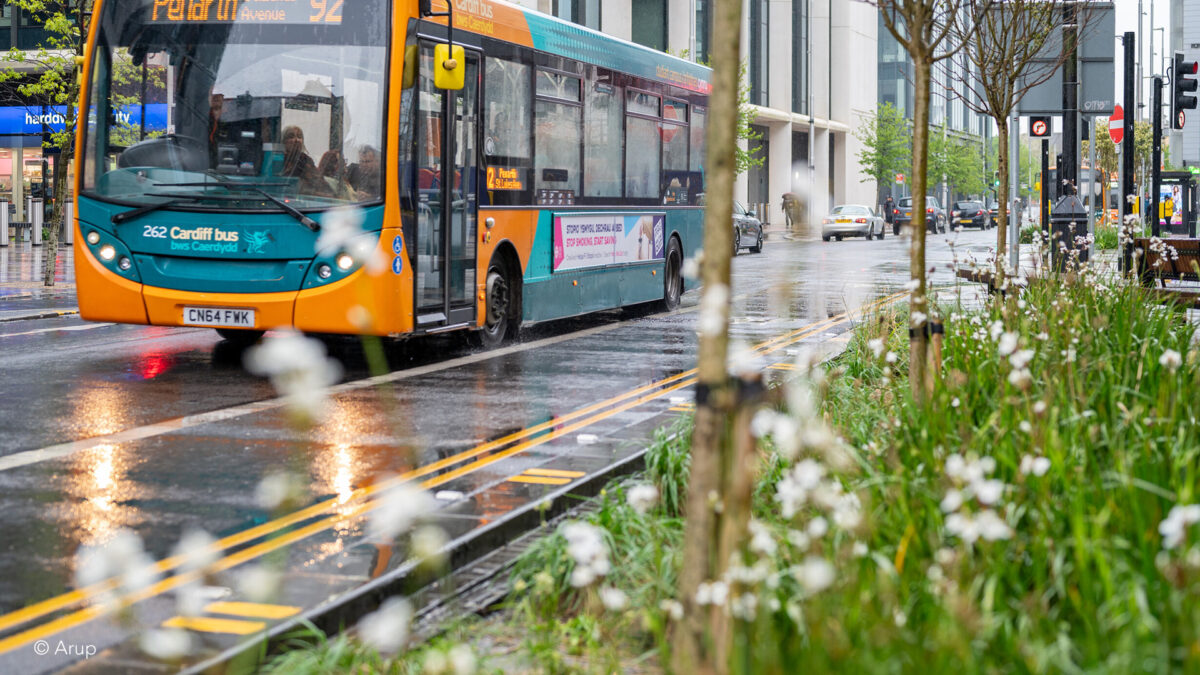
Recent winters have offered a familiar pattern: saturated ground, repeated rainfall events and localised flooding triggered less by rivers overtopping than by water failing to go anywhere once it reaches hard surfaces.
Recently, the Environment Agency has issued flood warnings in 99 areas following a record-breaking month of rain, the wettest on record for several areas. If flood warnings are becoming routine rather than exceptional, then distributed surface water control should be routine too.
This is precisely the kind of risk profile SuDS were conceived to address – distributed, cumulative, and strongly influenced by how urban land is surfaced and drained. They are designed to replicate natural drainage processes by managing rainfall close to where it lands, reducing both runoff volumes and pollution entering conventional sewers. That multifunctional role is now well understood.
In technical terms, the case has largely been settled.
The legislative tool exists – but remains unused
Schedule 3 of the Flood and Water Management Act 2010 was intended to embed SuDS into development through an approval and adoption framework, but 15 years later, it is still not in force in England.
As the Commons briefing Sustainable drainage systems (SuDS) (Research Briefing CBP-10483, published in February 2026) confirms, while Wales has implemented Schedule 3, England has instead relied on planning policy to encourage SuDS uptake rather than mandate it. That decision has had a subtle but important consequence: SuDS are supported in principle, but optional in practice.
This creates an unusual policy position: climate risk is acknowledged as systemic, yet one of the most spatially adaptable mitigation tools remains discretionary. This creates a gap between national adaptation ambitions and the mechanisms available to deliver them consistently.
Encouragement is not the same as integration
Planning policy, including the National Planning Policy Framework (NPPF), expects major developments to incorporate SuDS unless there is clear evidence that this would be inappropriate. But an expectation filtered through planning negotiation is not the same as a statutory design baseline. Without a parallel approval and adoption mechanism, delivery inevitably depends on interpretation rather than a consistent statutory baseline.
- A planning-led model can unintentionally produce variability: Some authorities push strongly for blue-green infrastructure.
- Others accept conventional underground storage if minimum criteria are met.
- Developers navigate differing interpretations of what ‘appropriate’ means.
The result is uneven application of something originally intended to address a universal risk.
Compare that with other infrastructure systems, and you’ll see the discrepancy. No one asks whether a development should include utilities, highways access or structural drainage capacity – these are assumed, and designed in from the outset.
SuDS, by contrast, are still too often fitted into schemes once the primary spatial and commercial parameters are already fixed.
Elements of a legacy drainage mindset still influence modern delivery
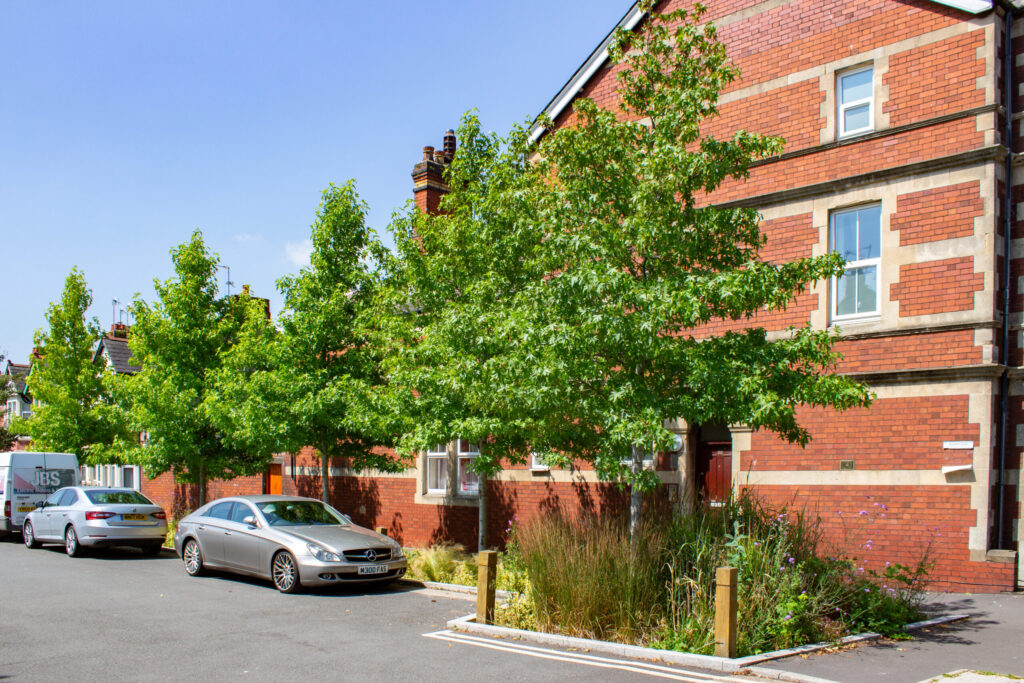
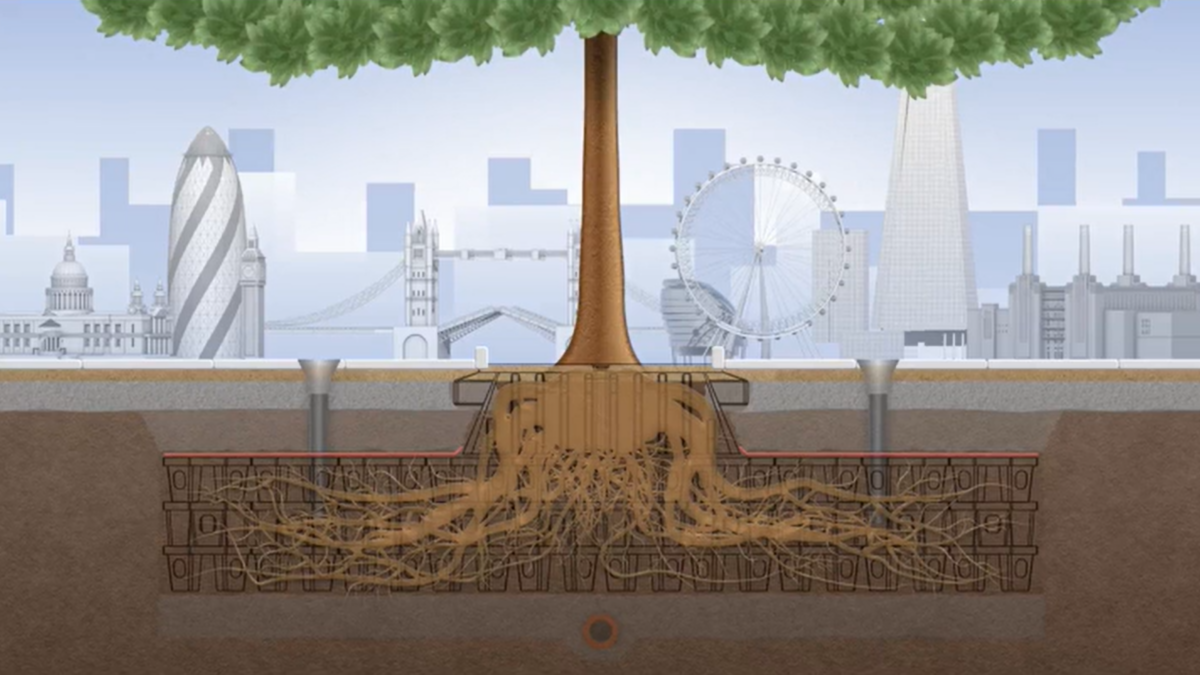
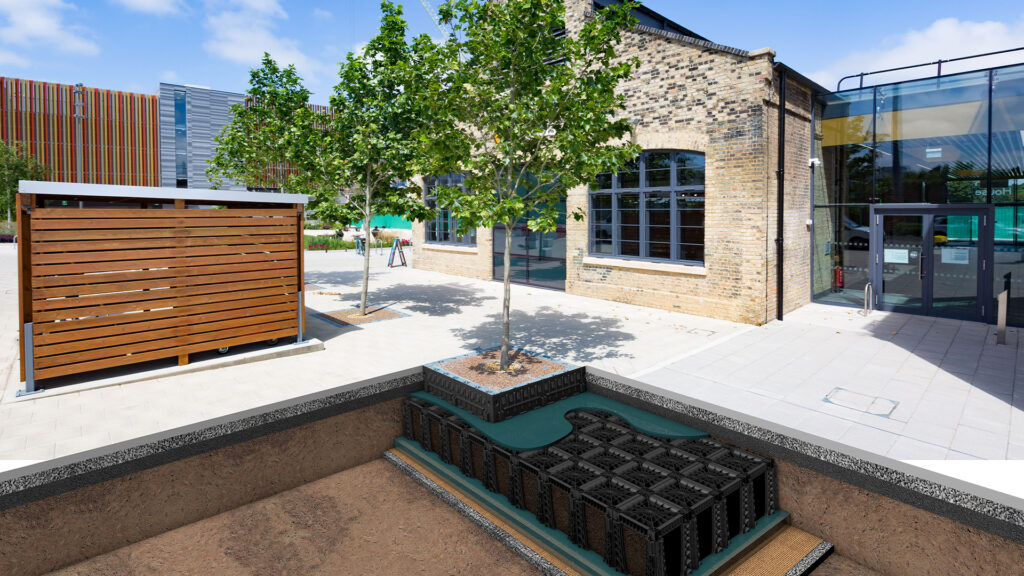
Traditional drainage thinking is expansionist: increase pipe capacity, add storage, move water away faster. Nature-based SuDS invert that logic. They distribute control, slowing and attenuating flows across a catchment rather than concentrating them in engineered assets – an approach shown to outperform single, large interventions when deployed cumulatively.
When integrated early, distributed SuDS can also reduce reliance on large single-purpose attenuation features, improving spatial efficiency and preserving developable land. They are not only hydrologically effective; they are strategically efficient.
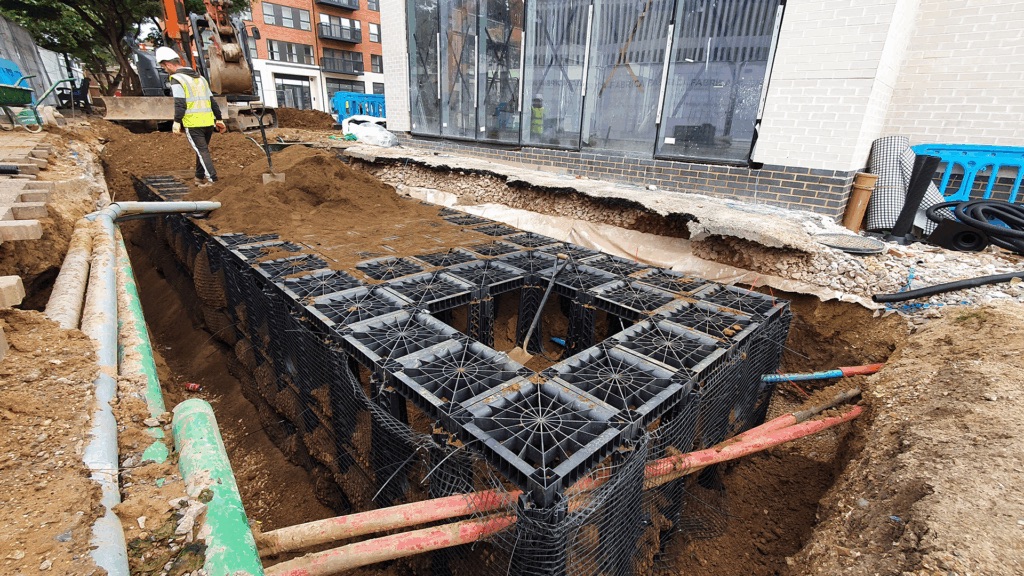
This distributed model aligns closely with the wider shift toward climate adaptation and multifunctional infrastructure. Yet delivery mechanisms remain rooted in a twentieth-century conception of drainage as a buried utility rather than a spatial system.
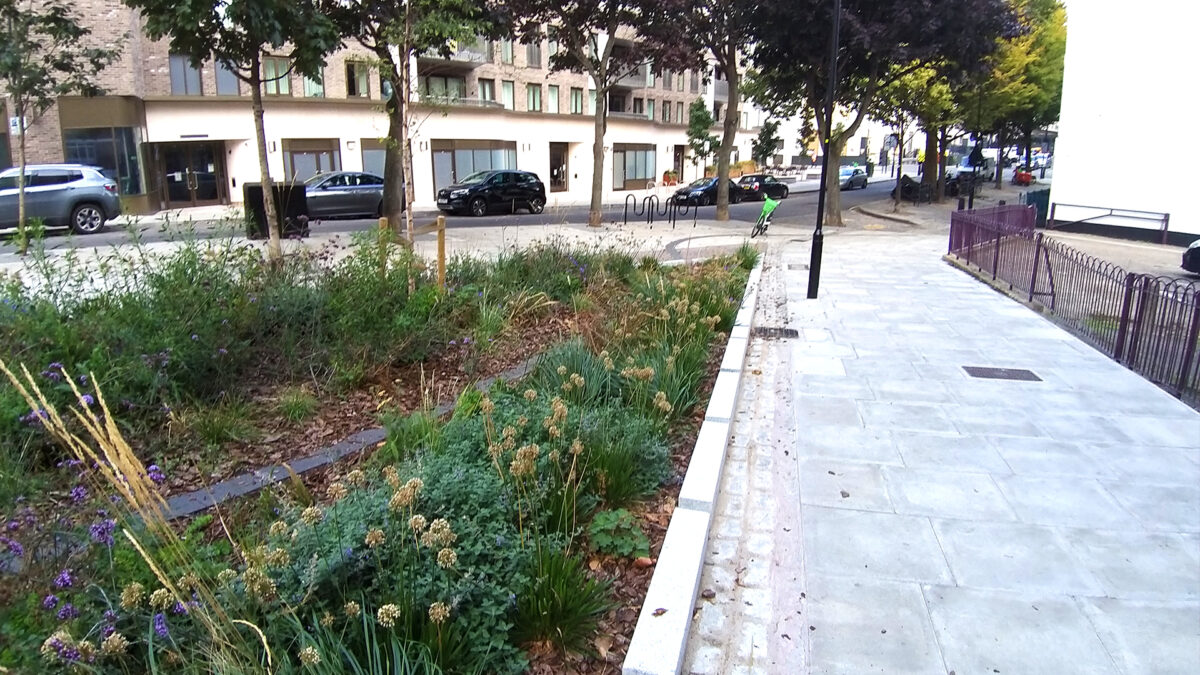
The policy direction is clear, even if the mechanism isn’t
The National Standards for SuDS now emphasise outcomes such as water quality, biodiversity, amenity and long-term maintainability alongside hydraulic performance. In other words, policy already recognises that drainage infrastructure must do more than convey water.
But without a statutory trigger equivalent to Schedule 3, implementation depends on interpretation, negotiation and local confidence – precisely the conditions that make innovation appear risky rather than routine.
Encouragement alone rarely normalises practice; it can unintentionally perpetuate optionality. It’s not a knowledge gap, it’s an adoption gap.
The barriers cited most frequently are not technical capability but process uncertainty:
- Who adopts and maintains the assets?
- How are responsibilities allocated?
- At what stage should systems be designed?
- How are multifunctional benefits evaluated?
These are governance questions, not engineering ones. And they tend to arise precisely because SuDS are introduced late, and more likely to be treated as mitigation than infrastructure – a pattern mirrored across many forms of green-blue design where timing, not intent, determines success.
Making SuDS ‘default’ is less about mandates than mindset
There is a tendency to frame the debate around whether Schedule 3 should be commenced. But the deeper shift required is cultural as much as regulatory.
A default SuDS approach would mean:
- Considering surface water at the same conceptual stage as movement networks or utilities.
- Designing landscapes to perform hydrological functions, not simply accommodate planting.
- Viewing distributed attenuation as capacity, not ornament.
- Assessing developments by how they manage rainfall as a resource, not a waste product.
In short, treating water management as spatial infrastructure embedded in place, rather than an underground service appended to it.
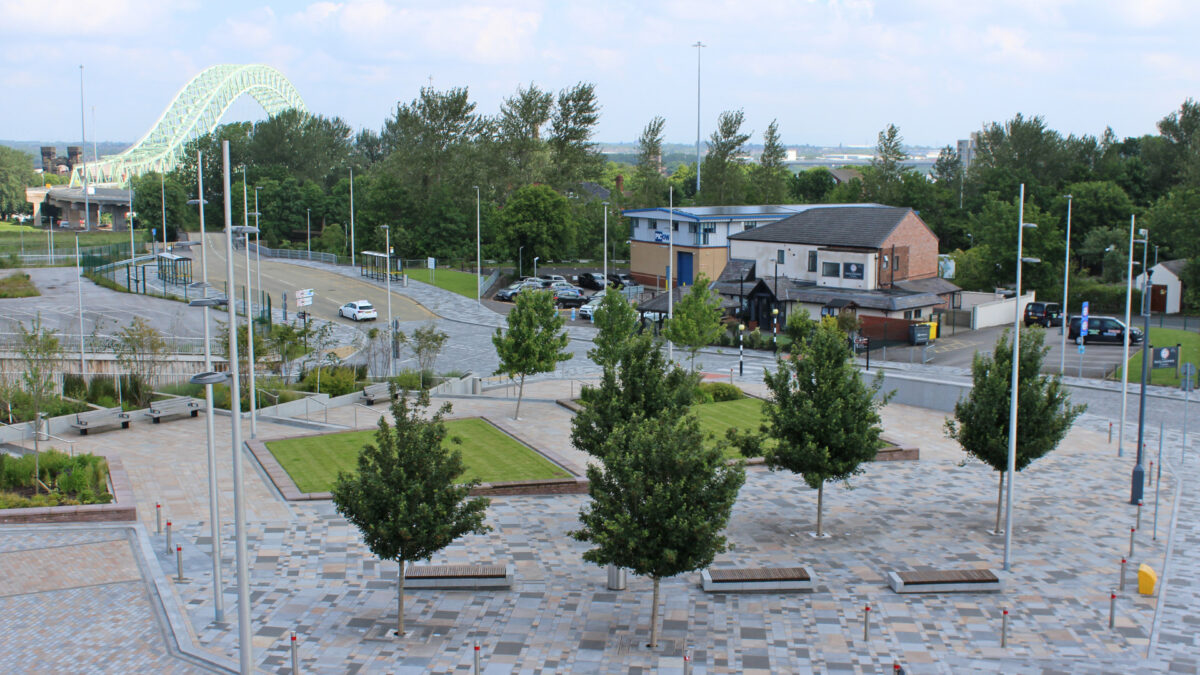
The cost of doing nothing
England’s current model – supportive but non-mandatory – risks locking in inconsistency at the exact moment climate variability is increasing pressure on urban drainage systems.
Where SuDS are delivered well, they demonstrate clear resilience, environmental and placemaking value. Where they are not, developments continue to rely on approaches designed for a very different hydrological context. This divergence becomes increasingly difficult to reconcile in a policy landscape that openly acknowledges escalating climate risk, and it is unlikely to narrow without a clearer definition of what constitutes normal practice.
From preferred solution to standard practice
Nature-based SuDS are no longer novel, experimental or niche. They are a mature response to a changing risk environment. Policy already recognises their value. Industry increasingly understands their delivery. The remaining step is to treat them not as an enhancement, but as the default condition of development.
The climate assumptions embedded in conventional drainage design have already shifted. The only question is whether our planning and delivery model will shift with them — or continue to treat resilience as optional.
Bridging this adoption gap often means translating policy intent into deliverable, adoptable design. If you’re navigating how to embed nature-based drainage into live or upcoming schemes – – whether to satisfy planning expectations, manage land use efficiently or build long-term resilience – our team works alongside designers, engineers and developers to translate policy intent into practical, adoptable solutions.