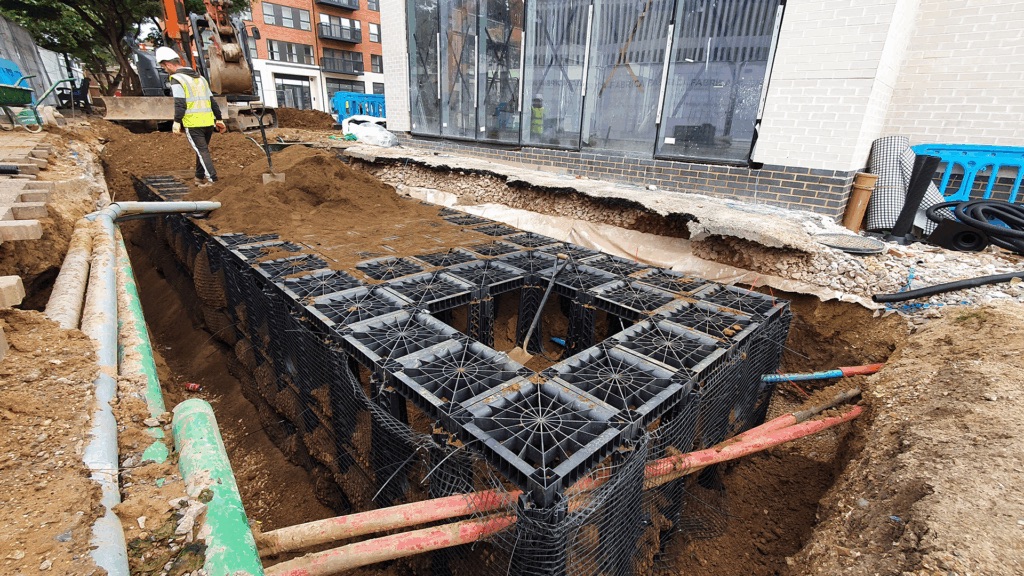
There’s no denying that in these increasingly eco-conscious times, the direction of travel is towards green-blue infrastructure, with both urban greening and nature-based Sustainable Drainage Systems (SuDS) becoming considered more desirable and important in UK developments for myriad reasons – including, crucially, climate resilience in the face of increasingly frequent and extreme storm events.
From the stick of increasingly stringent compliance requirements to the carrot of public sentiment around the desirability of homes in areas with green space and biodiversity, the SuDS agenda is gaining traction. But while many industry insiders may be keen to engage with these ideas on a theoretical level, the practicalities of implementation – and the commercial incentives to do so – might still be quite hazy.
So, does taking a landscape-first approach to development really offer tangible benefits, or is that pie in the sky when it comes to the real world? We would suggest the evidence supports the idea that early green-blue infrastructure integration is much more than just greenwashing.
Streamline the planning process
The UK planning system is a notorious bottleneck for development. While there’s no official figure, numerous local authorities and design bodies anecdotally suggest that landscape-led proposals tend to move more efficiently through the process; thoughtful green infrastructure design often addresses common concerns up front – including drainage, amenity space and biodiversity value – making applications more robust and less likely to attract objections.
In addition, the National Planning Policy Framework (NPPF) includes an explicit preference for landscape-led approaches, while the soon-to-be-implemented Schedule 3 of the Flood and Water Management Act will make SuDS mandatory in areas beyond those considered at flood risk and or a certain size, meaning planners are already increasingly looking for green infrastructure commitments as part of their approval criteria. Given the importance of early approvals in keeping projects on track (and on budget), this planning-smoothing benefit is a compelling reason to integrate landscape considerations from day one.
Boost kerb appeal and buyer interest
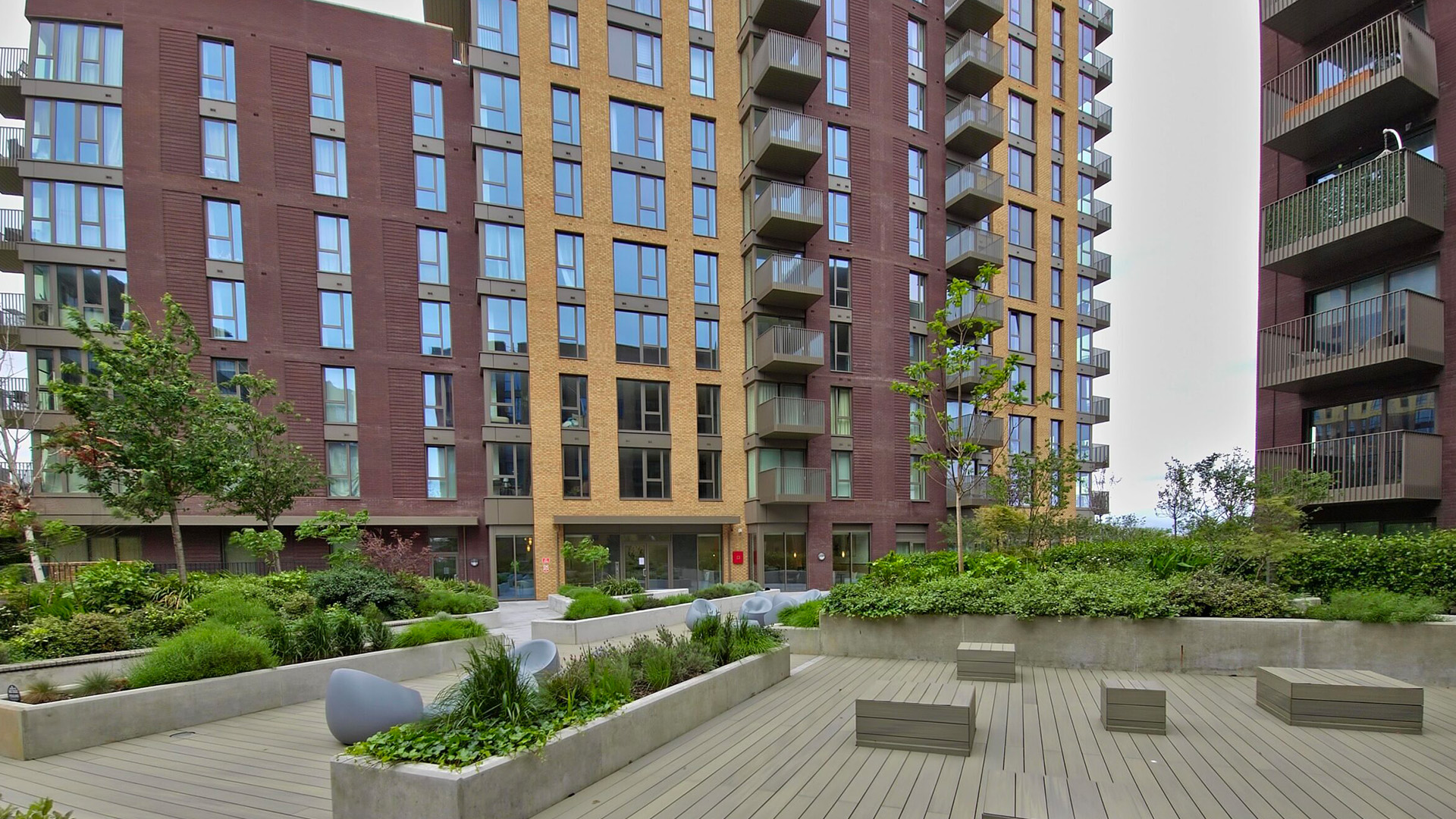
Green spaces are no longer a ‘nice to have’, they’re a commercial asset. Homebuyers will pay a premium for properties in National Parks (51% higher), National Landscapes (48% higher) and National Scenic Areas (46% higher), according to Savills, which indicates just how important access to nature can be for people; there’s also evidence from the Office for National Statistics that shows the closer houses and flats are to public green spaces, the higher the property price premium; similarly, Rightmove data shows that proximity to a London park can boost the average property price by a huge 84.8%. In an increasingly competitive market, this price uplift makes landscape-first strategies a sound investment.
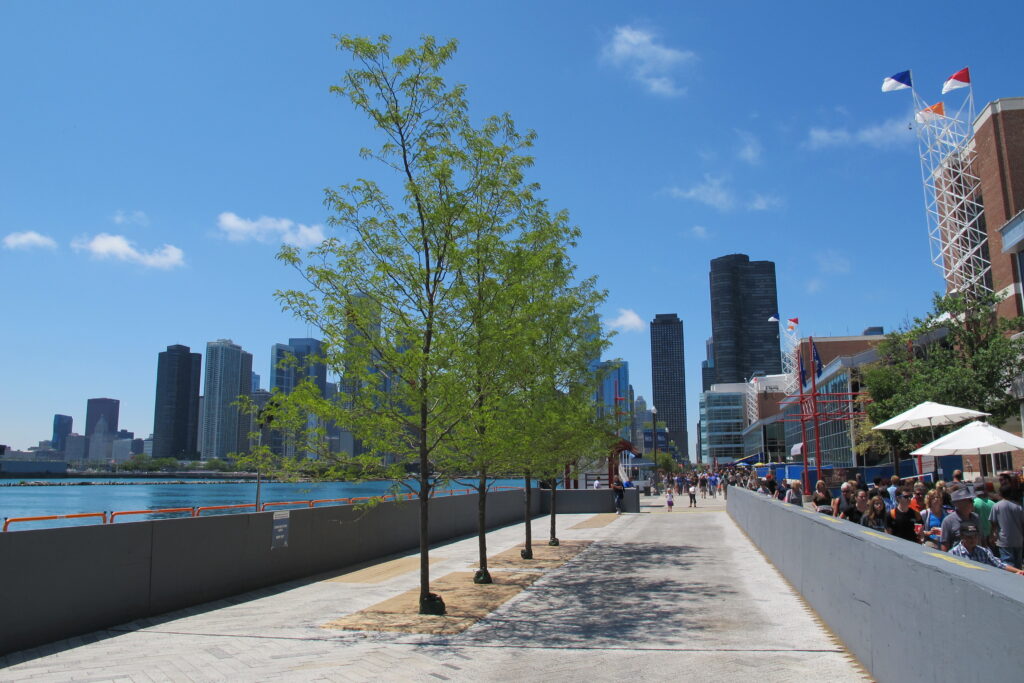
You only have to look at examples of developments lauded for their approach to the landscape, from the high-end Accordia in Cambridge (RIBA Stirling Prize, 2008 – the first-ever residential scheme to do so) to the higher volume Water Colour village-sized extension to Redhill – on a former quarry and landfill site – with its Surrey Wildlife Trust adopted lagoons and waterside green spaces, to see the obvious increased appeal of properties built with a landscape-first design philosophy.
As an added bonus, the early creation of green spaces will ensure that potential purchasers don’t have to imagine what freshly-planted plants and trees might look like once they establish themselves, and later phases can attract even more interest – and stronger prices – through green space maturity increasing desirability.
Avoid remediation and simplify maintenance
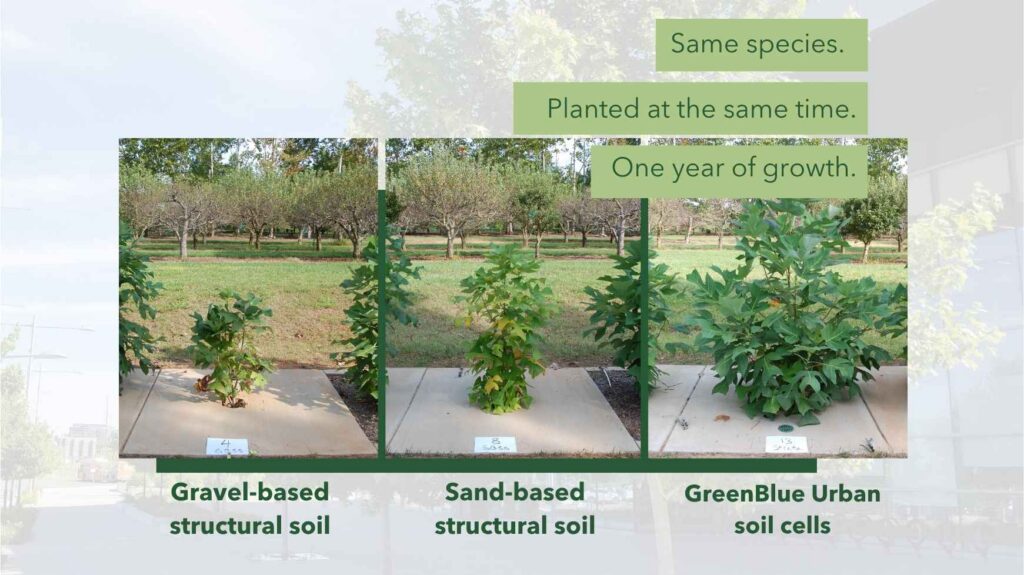
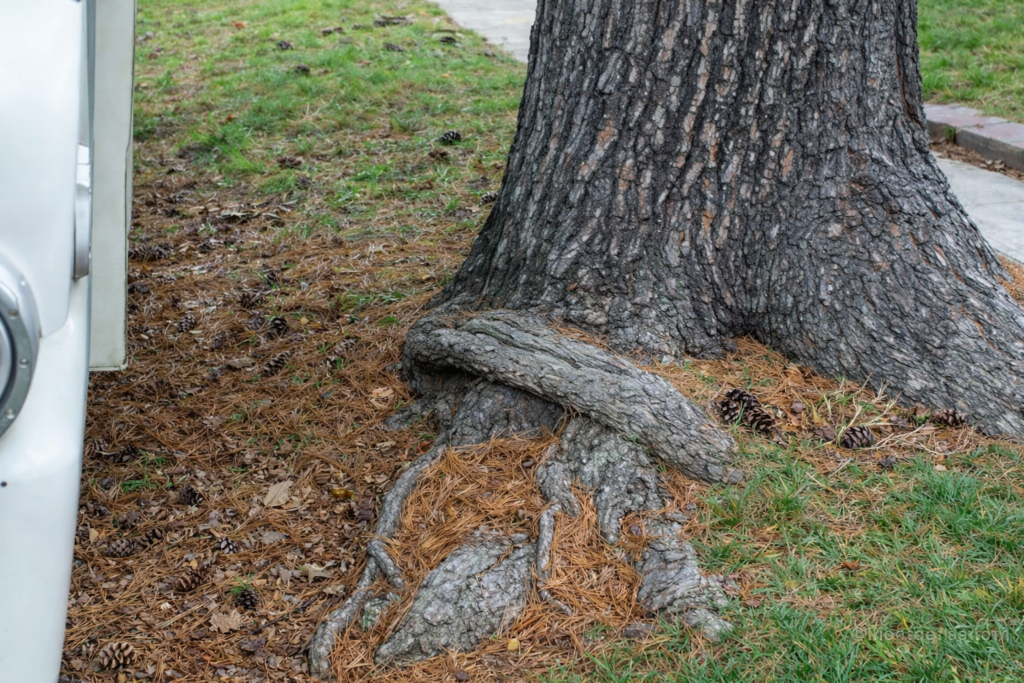
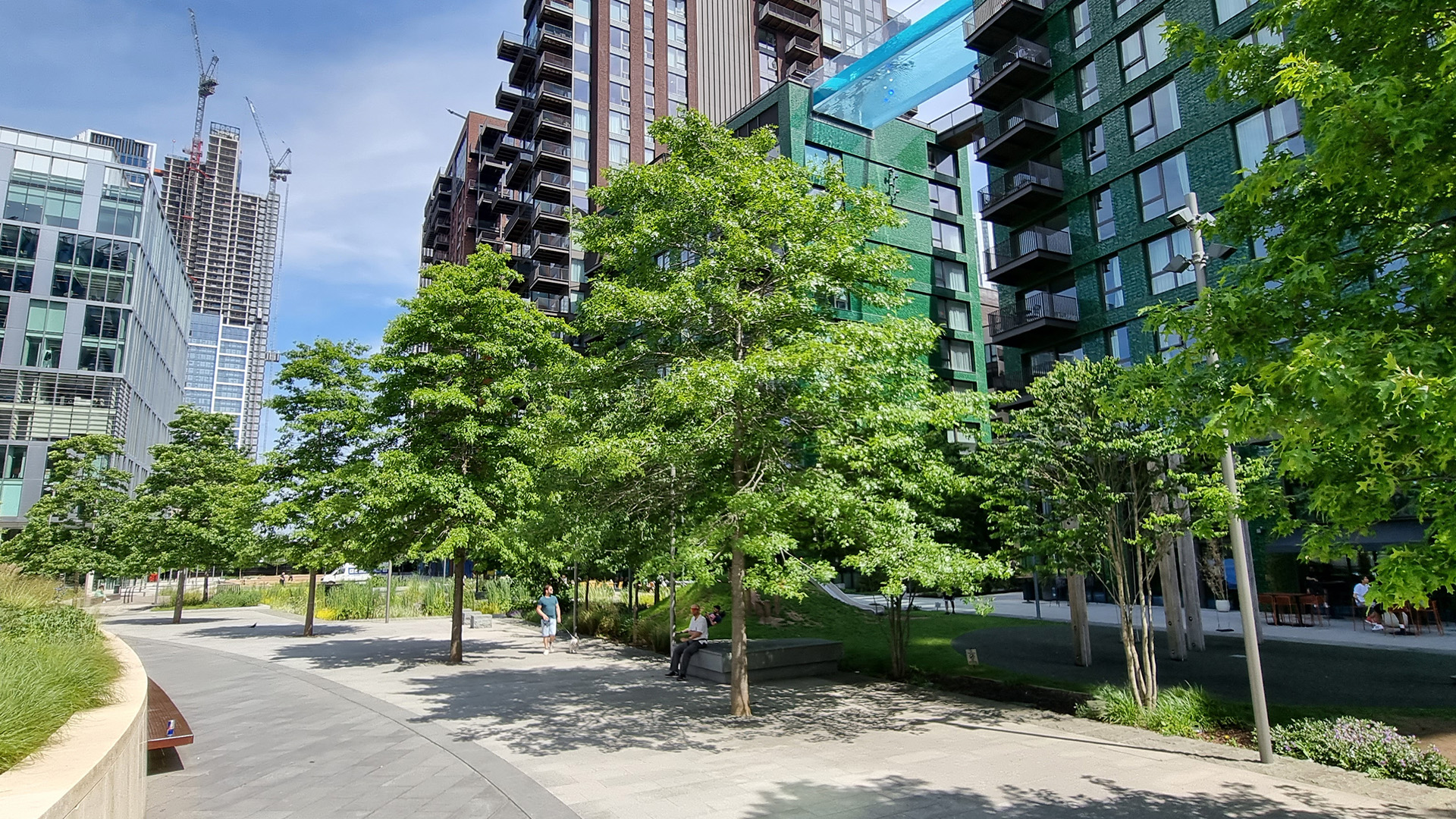
A rushed approach to landscaping can lead to expensive maintenance problems down the line – and possibly bad PR for the developer, if the number of online news stories and social posts about new-build developments with trees and plants that have died is anything to go by. It stands to reason that tree and plant establishment success rates improve when early-stage planning includes green-blue infrastructure that supports healthy growth, and helps buffer both the effects of flooding and drought. The message is clear: integrating nature-based solutions at the start prevents costly corrections and reputational damage later.
Improve stakeholder relations
Developers often encounter resistance from local communities and stakeholders, but early, visible attention to green space provision can help shift perceptions. By establishing green-blue infrastructure from the outset, developers demonstrate a long-term commitment to quality placemaking — a signal that resonates with local residents, councillors and community groups alike. These early interventions can build trust and create opportunities for positive engagement, whether through site visits, planting events, or simple walk-by visibility that reinforces the project’s environmental credentials.
For investors and partners, landscape-led design also communicates attention to detail, ESG alignment, and an ambition to deliver more than just buildings. In this way, prioritising landscape early not only enhances the physical environment but also strengthens relationships and softens resistance across a wide spectrum of stakeholders.

Future-proofing for climate resilience
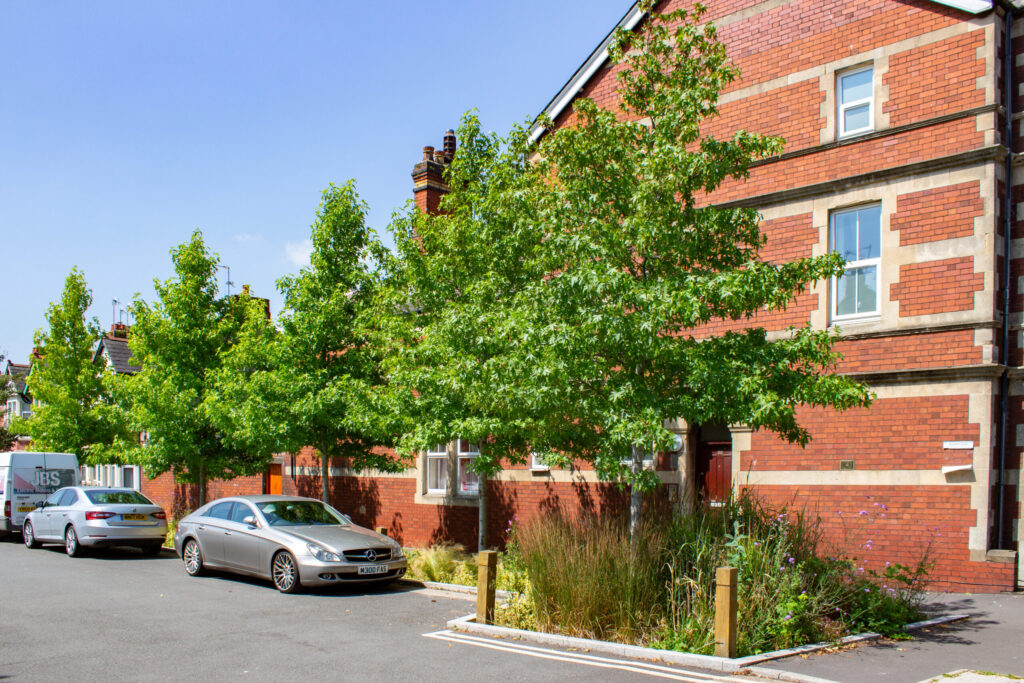
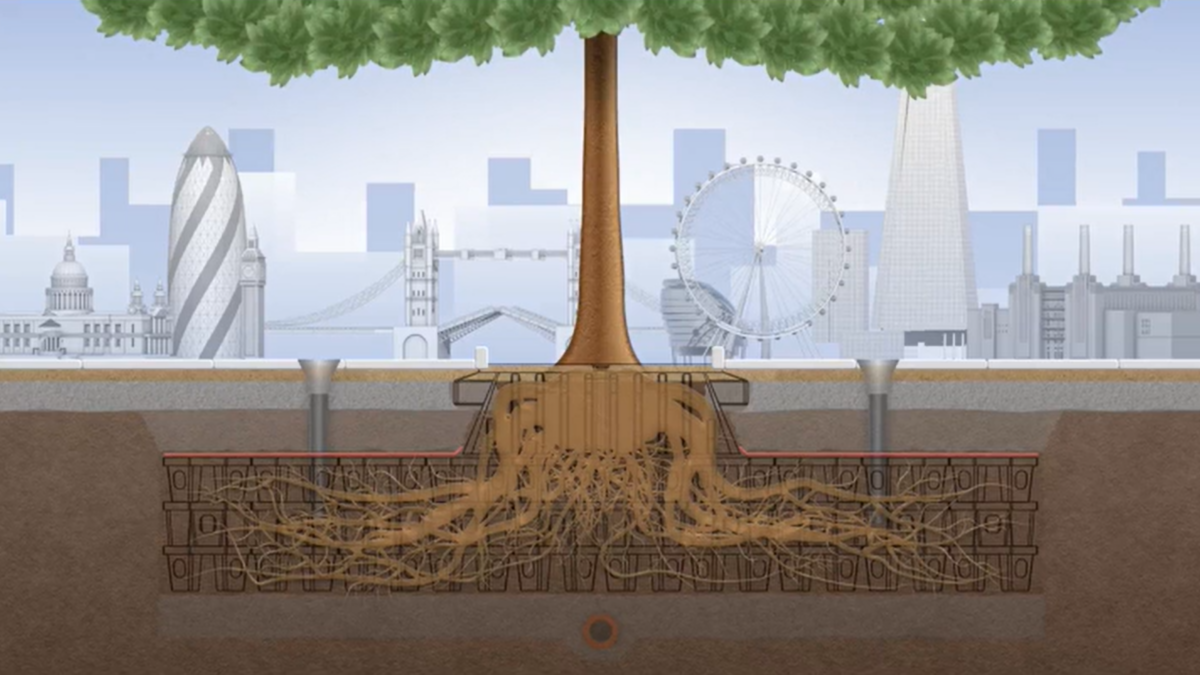
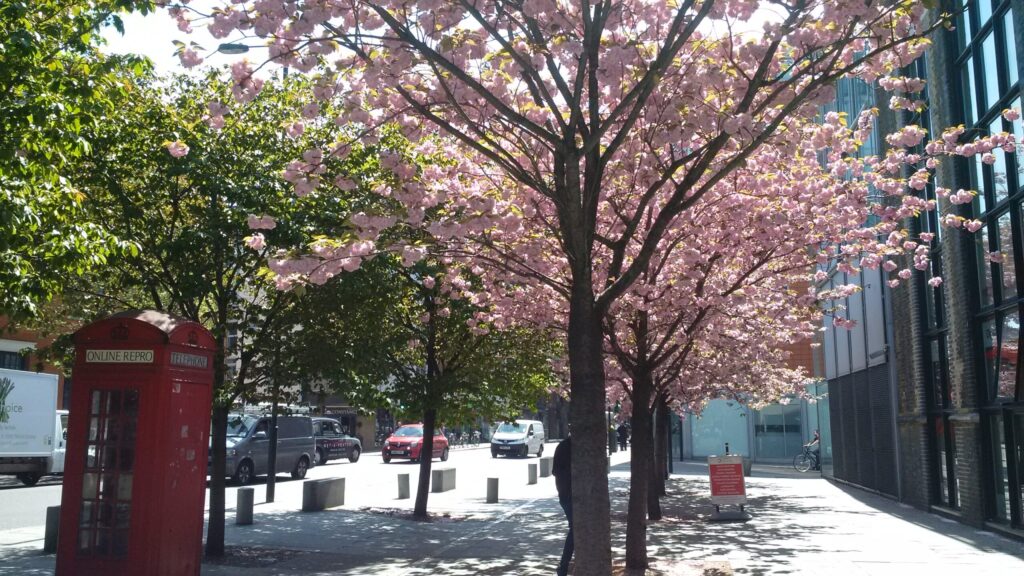
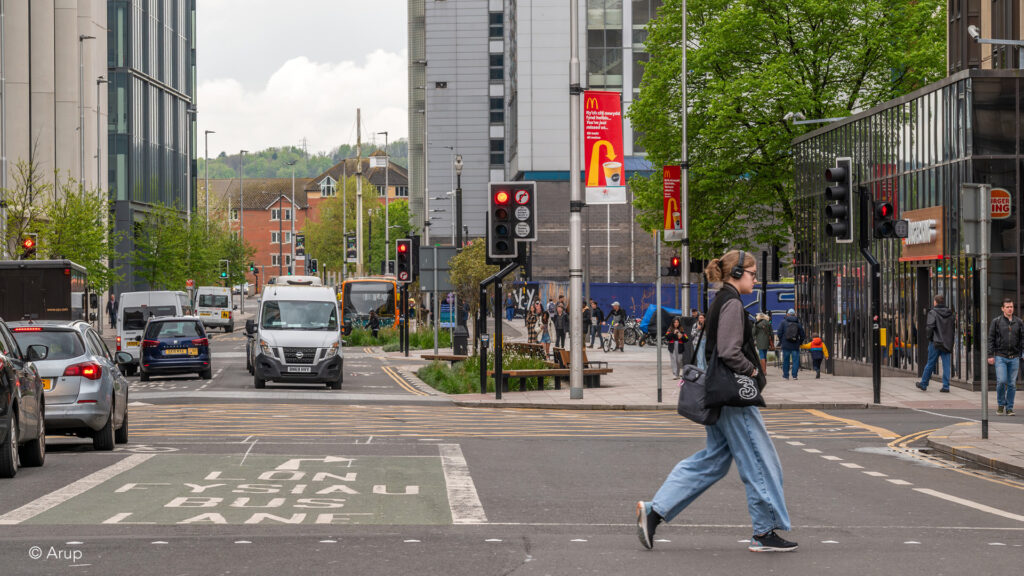
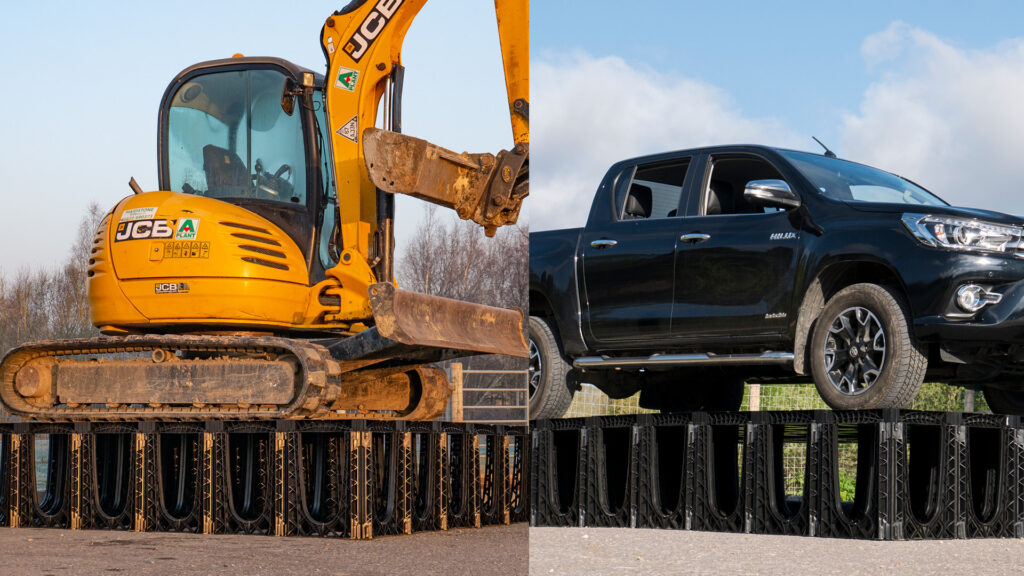
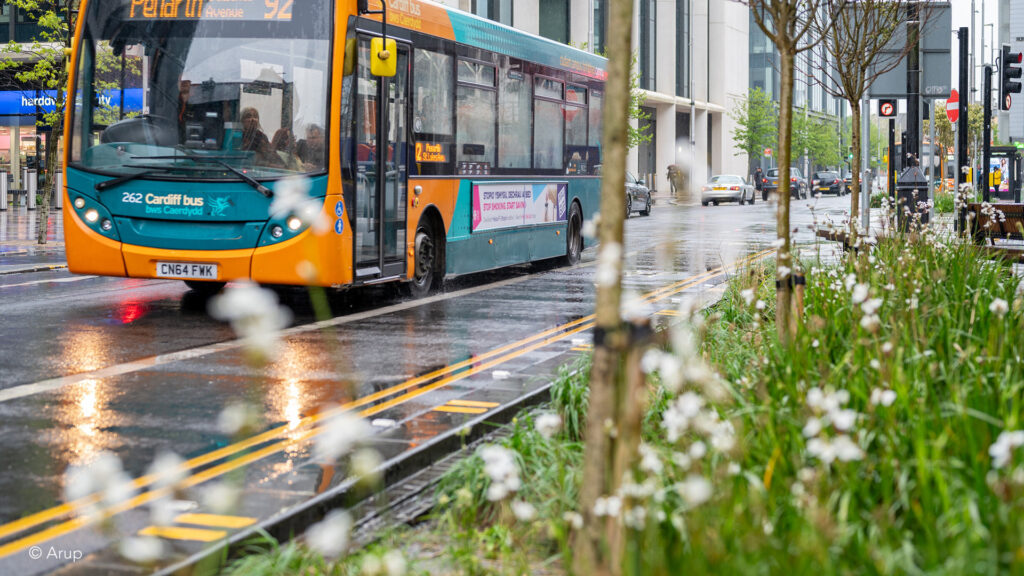
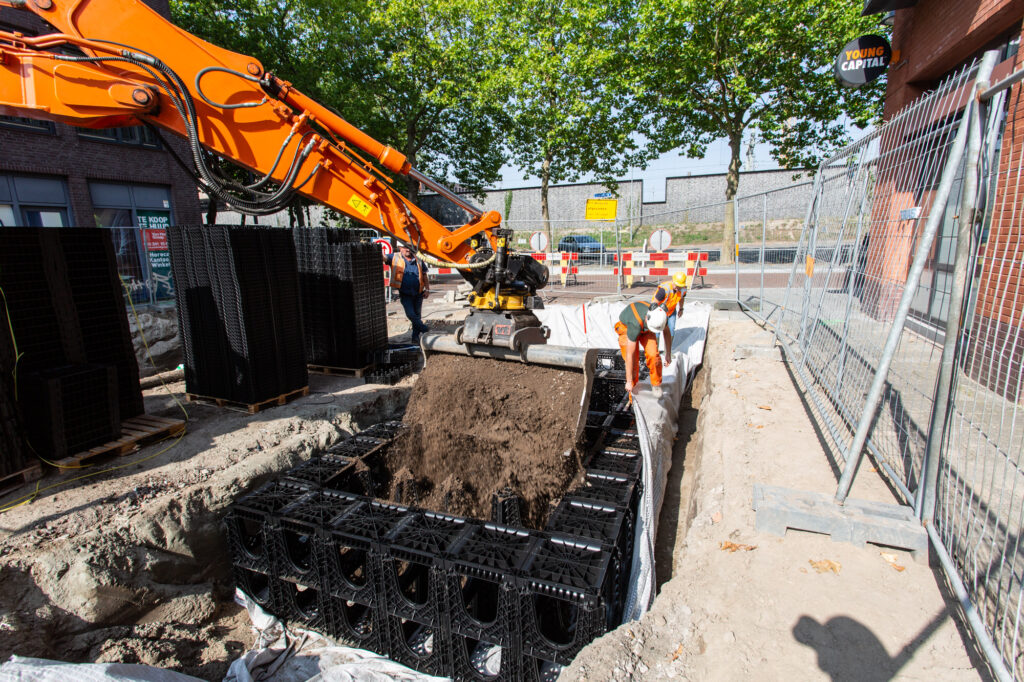
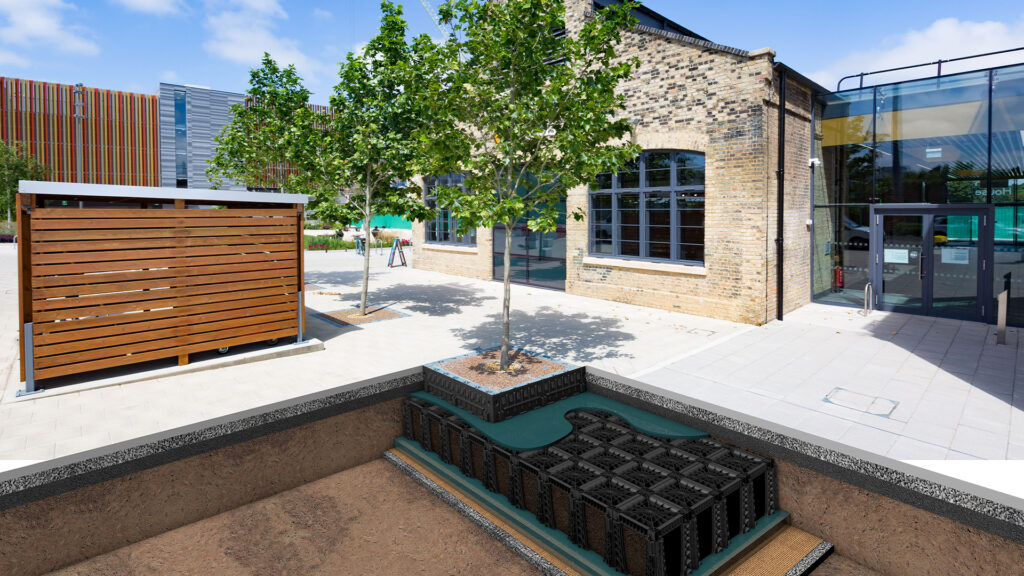
Then there’s an even more urgent consideration, too: the climate resilience of our built environment. As extreme weather events become more common, flood risk and rising urban temperatures are pressing concerns for any new development. A landscape-first approach doesn’t just enhance aesthetics and control costs; by prioritising natural systems from the outset, developers can embed features like swales, tree pits and permeable surfaces directly into the design, helping to slow and manage surface water while reducing pressure on conventional drainage networks. These same green elements also help to cool urban areas, softening the heat island effect and improving long-term liveability. In this way, landscape-led development is a proactive response to climate pressures — one that’s fast becoming essential.
Bridging the gap between policy and practice
To some, ‘landscape-first’ might sound like a costly detour when there are timelines to be juggled and margins to be considered, all against a backdrop of uncertain policy direction. But while regulations may still be playing catch-up, the market is already rewarding those who go green – and do so early.
There may be confusion about deployment, and it may be another item on an already full checklist of challenges to consider given current commercial conditions. But as the evidence shows, embedding landscape strategy from the outset isn’t just about sustainability – it’s about de-risking projects, securing faster consents, unlocking premium values and smoothing stakeholder relations.
By treating green infrastructure as an integrated component of the process, rather than a bolt-on, developers can build more resilient, higher-value schemes, and get ahead of the curve. Once these measures become mandatory, these developers will find themselves out in front – and in the end it’s not just about being ahead of the regulations, it’s about being ahead of the competition.
If you’re planning a new development, let’s talk about how a landscape-first approach can work in practice – get in touch with our team today, to find out how we can help you unlock the full potential of your site.