Designing urban landscapes that successfully support both healthy tree growth and the structural needs of pavements, pathways, and vehicle areas is a complex engineering challenge.
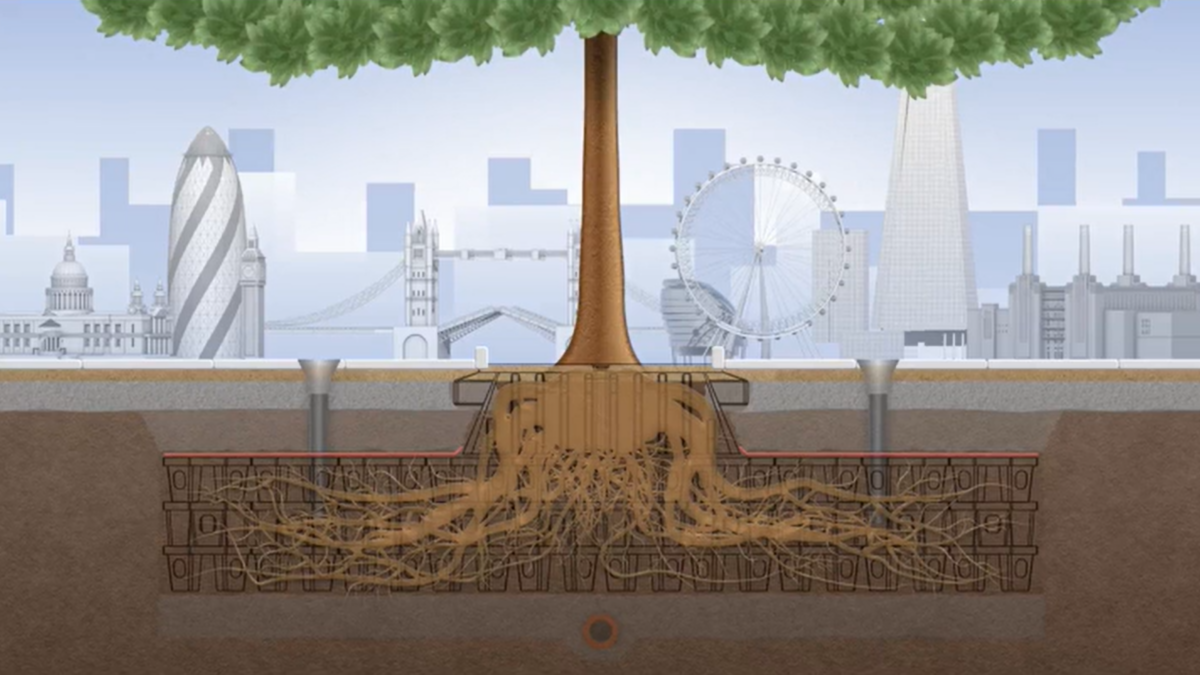
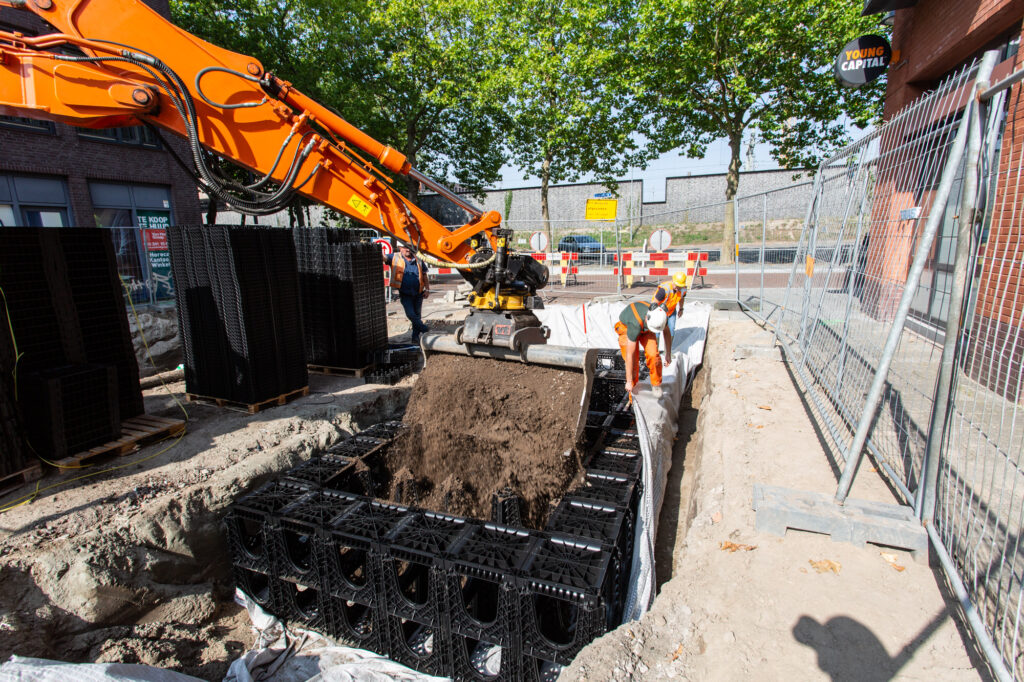
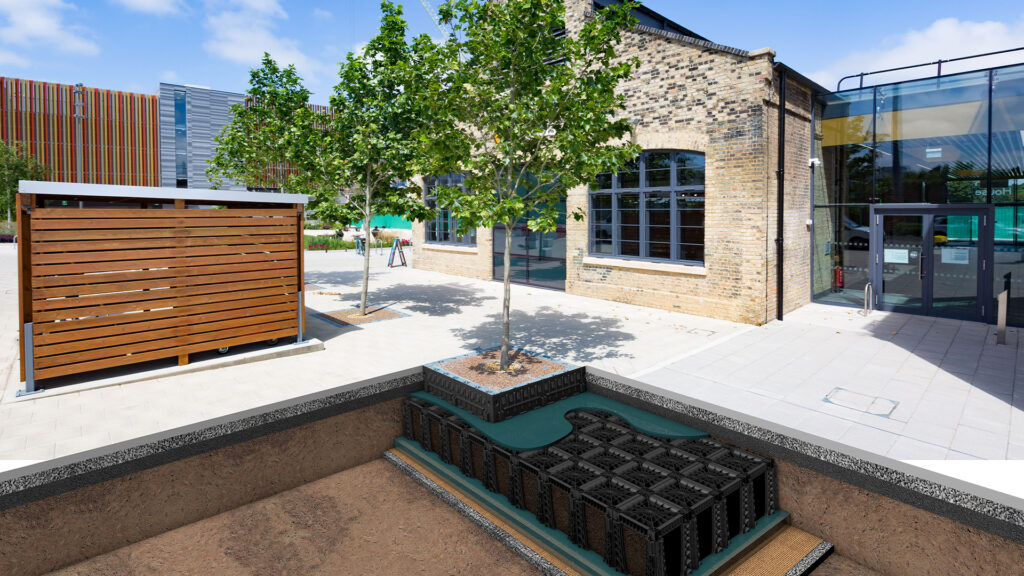
Beneath the surface, the soil cell system plays an essential role in meeting these demands. Its ability to bear static loads, resist lateral forces and preserve large volumes of uncompacted soil depends on whether it is installed as a fully interlocking, gap-free structure.
When soil cells are properly connected, the system behaves as a single, continuous structural module. When they are spaced out, they system’s behavior changes dramatically, becoming unpredictable, weakened and difficult to model with confidence. This single installation decision determines whether the landscape above will perform reliably for decades or become a liability.
Why Gaps Between Soil Cells Undermine Structural Integrity
Spacing soil cells apart, whether to save costs or simplify installation, may appear harmless, but it can undermine the performance of the entire system. Even small gaps interrupt the interlocking pattern that the cells rely on to achieve strength and rigidity.
Once gaps exist, the system is no longer acting as the engineered product that has been tested and modeled. Instead, it becomes an untested configuration with unknown performance characteristics. This introduces a series of structural risks, especially in areas exposed to vehicle loading.
Gaps weaken the system in several ways:
- Reduced static load-bearing capacity: The cells can no longer distribute vertical loads across the network, creating weak points susceptible to deformation.
- Loss of lateral rigidity: With the interlock broken, the system flexes and shifts under pressure, increasing strain on pavements.
- Unpredictable performance: Engineering calculations become unreliable because the installation no longer matches the tested configuration.
In paved areas used by vehicles, this can result in subsidence, rutting or pavement failure. In high-profile urban landscapes, these outcomes are not only expensive to repair but often highly visible.
The Concrete Slab Problem: When ‘Fixing’ Gaps Makes Things Worse
There is sometimes a belief that geotextile can compensate for spacing. Geotextile is excellent for containment, but it has no structural capacity. It does nothing to restore the missing rigidity between spaced soil cells.
To genuinely bridge gaps, often the only viable solution is to install a concrete slab across them. But this creates its own set of problems:
- Higher carbon footprint
- Greater installation complexity
- Increased cost
- Reduced soil volume and permeability
In effect, spacing out soil cells often forces designers to add more hardscape, undermining the environmental benefits the system is supposed to support.
Interlocking Systems: The Only Reliable Way to Maximize Performance
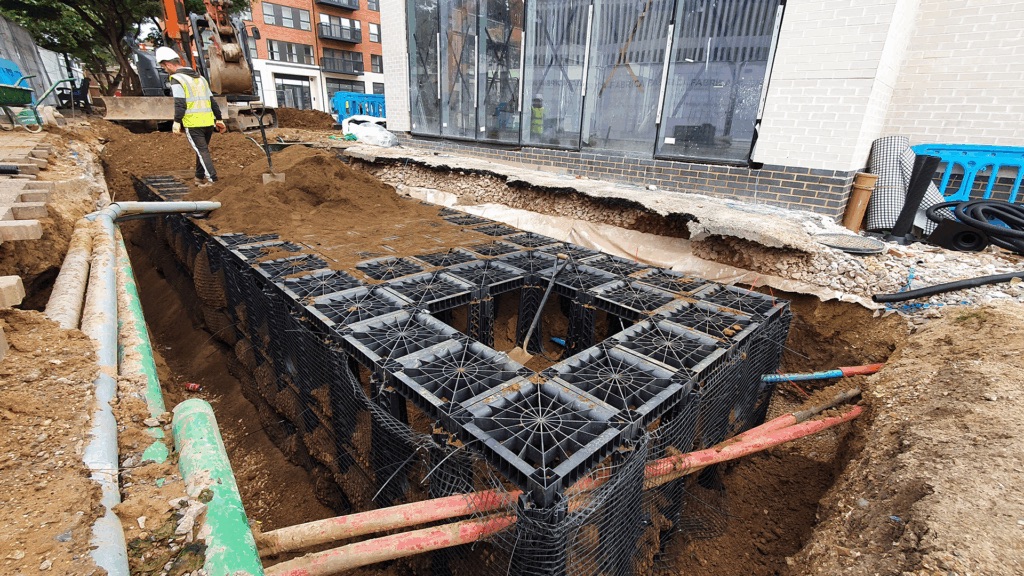
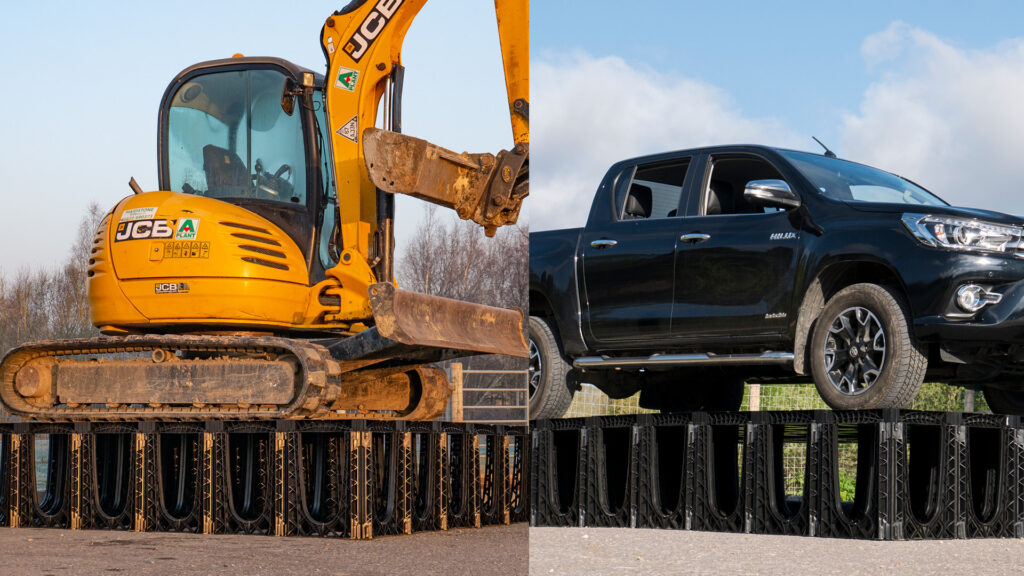
High-quality soil cells are designed and modeled as interlocking, continuous structures. Their performance depends on this interconnection. When assembled without gaps, the system provides:
- Predictable static load-bearing behavior
- Reliable lateral strength under traffic loads
- Even distribution of vertical and horizontal forces
- A stable environment that prevents pavement heave
Just as importantly, interconnected systems create and maintain large volumes of uncompacted soil, critical for root expansion, aeration and water movement. Without this soil quality, urban trees cannot thrive or reach maturity. Gaps not only weaken the structure but also disrupt soil continuity, fragmenting the very growing environment the system was meant to protect.
Why Lattice Systems Outperform Column-Based Designs
The internal geometry of the soil cell system plays a significant role in its ability to resist pressure and maintain its shape. Lattice-style systems with infill panels have key advantages over column-based systems, particularly under lateral load.
Lattice systems offer:
- Superior lateral strength, due to continuous, cross-linked support members
- Better backfill confinement, preventing soil migration and settlement
- More open soil volume, allowing trees to grow stronger, deeper root systems
Column-based designs may offer vertical support, but they lack this horizontal cohesion. Under the pressure of traffic loads or soil movement, they are more prone to deformation, and they offer less protection against backfill loss.
RootSpace®: A Seamless, Gap-Free Structural Environment
RootSpace exemplifies the principles required for modern, high-performance soil cell systems. Its tightly connected lattice structure forms a seamless, rigid environment without the weak points created by gaps. By eliminating spacing, RootSpace maximizes both structural performance and soil volume.
This approach delivers several benefits:
- A continuous underground structure with high static load capacity
- Exceptional lateral loading performance, ideal for vehicle areas
- Consistent, uncompacted soil volume across the entire system
- Stable pavements that resist heave, settlement, and deformation
By working as a single, unified module, RootSpace supports both the engineering needs of the surface and the biological needs of the tree.
The Bottom Line: Interlocking Is Not Optional
Urban tree planting is a long-term investment. The performance of the soil cell system beneath the pavement determines whether this investment thrives or fails. Interlocking soil cells ensure predictable engineering behavior, long-term pavement stability, and healthy, mature trees. Spacing out soil cells introduces unknowns, weakens the structure, and undermines the environmental intent of the design, often requiring more concrete and more cost just to compensate.
The solution is straightforward: Install soil cells exactly as they were engineered, interlocked, gap-free, and structurally continuous. This is the only reliable way to ensure both pavement safety and thriving urban tree growth for decades to come.
Download the GBU Mind the Gap Resource for a technical look of interlocking systems, the structural risks created by gaps, and the performance advantages of lattice-based soil cells.