When the phrase root girdling appears in a specification meeting or planning discussion, it tends to stop the conversation cold. The challenge is that the term is often used loosely – sometimes to describe any visible change in root direction or diameter – when, biologically, true girdling is a very specific (and thankfully fairly uncommon) condition.
What root girdling is (and what it isn’t)
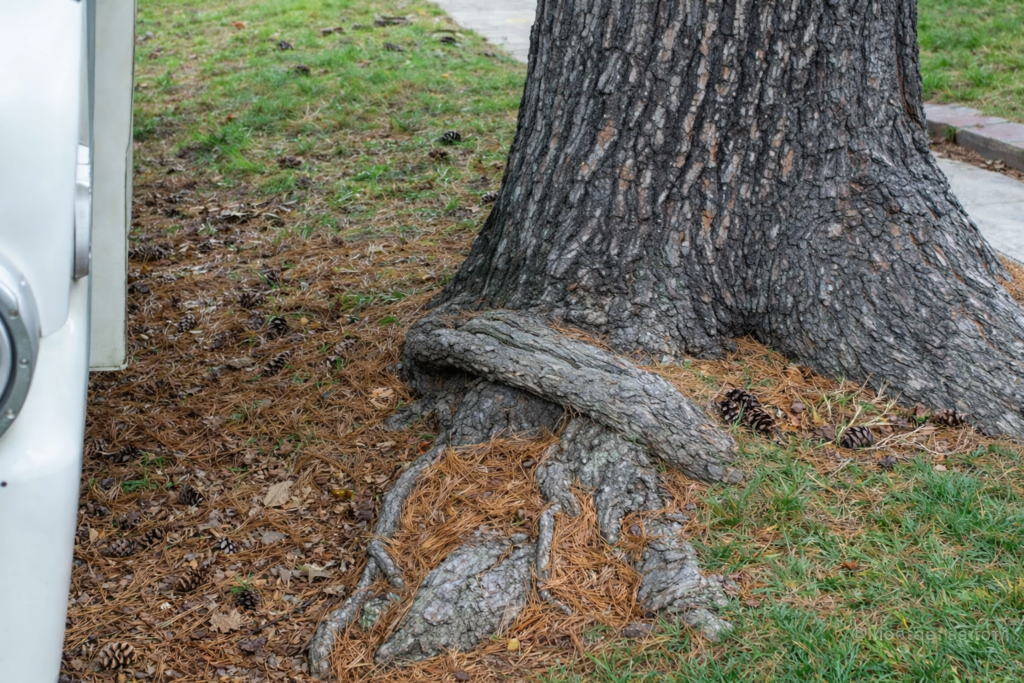
True root girdling – more precisely stem girdling roots (SGRs) – occurs when one or more roots grow around the trunk or root collar, compressing vascular tissue and restricting the movement of water and nutrients. Over time, this can weaken the tree, reduce vigor, and in severe cases contribute to decline or failure.
What matters is where and how the root develops:
- Girdling roots tends to originate early in a tree’s life, not years later.
- They are most strongly associated with container‑grown trees, where roots are trained to circle pot walls.
- They are exacerbated by poor planting practices – deep planting, small or compacted pits, uncorrected circling roots, or oxygen‑poor soils.
By contrast, a root that temporarily flattens, narrows, or deflects around an obstacle is not, by default, a girdling root. Roots are adaptive, plastic tissues; they respond to their environment continuously. The risk comes when deflection becomes chronic, circumferential, and unavoidable – in other words, when a root has no option but to keep growing around the trunk or another structural root.
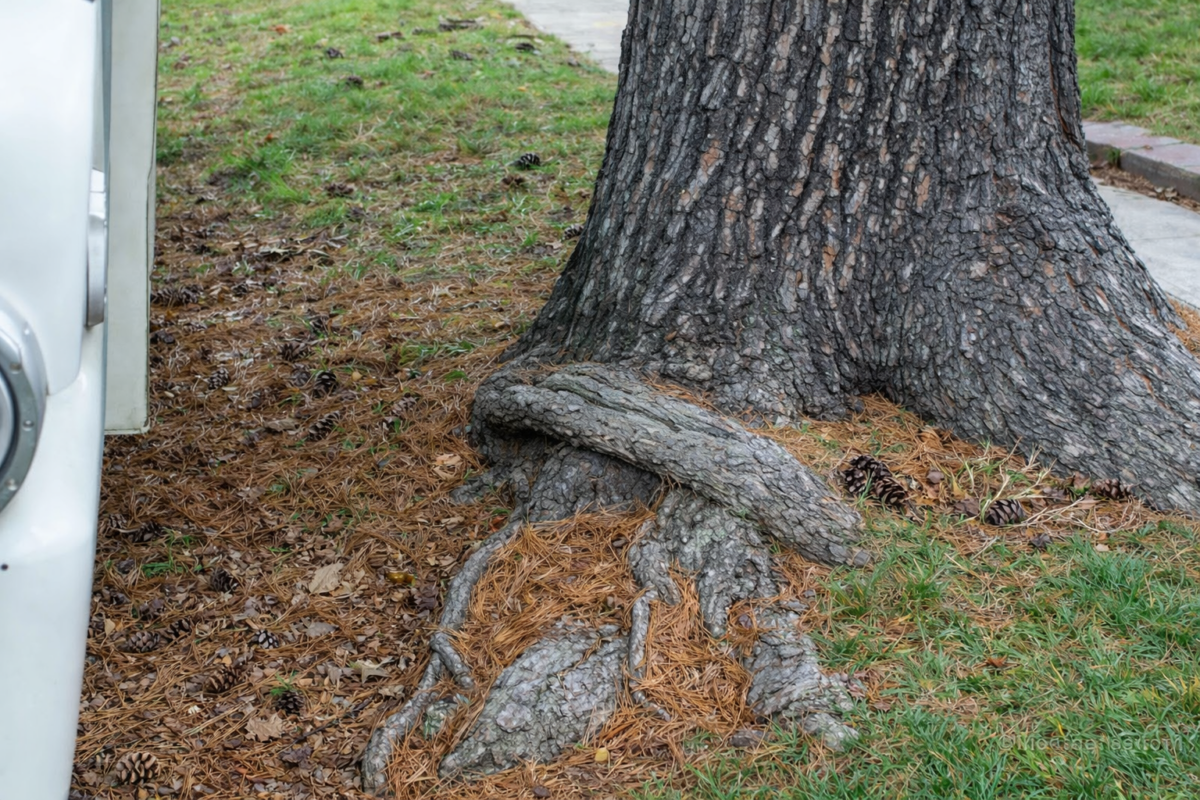
How roots really respond to constraints
Urban soils are full of constraints: compaction layers, services, pavement edges, foundations. Trees persist anyway, and they do so through a set of adaptive responses.
When a root encounters an obstruction, it typically:
- Deflects laterally rather than forcing radial expansion
- Flattens or becomes oval-shaped at the contact point
- Branches before or after the constriction
- Redirects growth into adjacent pores or voids
This matters because the vast majority of a tree’s functional root system is made up of fine roots, generally under 1 inch in diameter. These roots are responsible for most water and nutrient uptake, and they turn over constantly. If a particular root is impaired, the tree compensates by producing new roots elsewhere, provided suitable soil volume exists.
Only when a major structural root is subjected to continuous, circumferential pressure, and no alternative soil volume is available, does constriction begin to translate into meaningful physiological stress.
That combination of factors is far more common in:
- Containers
- Small or poorly connected tree pits
- Undersized planting holes
- Highly compacted, oxygen‑poor soils
It is not characteristic of systems designed around distributed void space.
When constriction does become a problem
Root constriction becomes biologically significant only when three conditions occur together. Firstly, where there is circumferential enclosure; the root is effectively trapped with no lateral escape route. The second condition is secondary thickening against an unyielding boundary – the root continues to increase in diameter while confined. Thirdly, there must be a lack of alternative soil volume, with no adjacent space exists for compensatory growth.
This combination is why classic girdling problems track so closely to container stock and small tree pits with limited soil volume and no lateral connectivity, and why improving soil volume and connectivity is one of the most reliable ways to reduce long‑term risk.
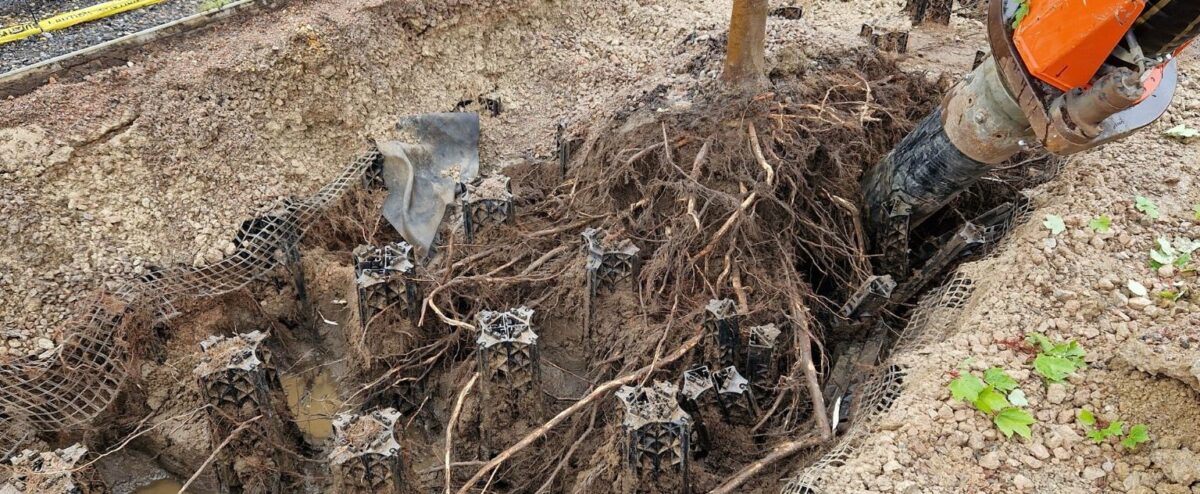
Soil cells and the misconception around ‘girdling’
Concerns about soil cell systems sometimes focus on the presence of lattice elements or struts, with the suggestion that roots passing near these components might be ‘girdled’.
It’s important to separate two very different scenarios: localized contact with a discrete structural element, and chronic encirclement of the trunk or a major root.
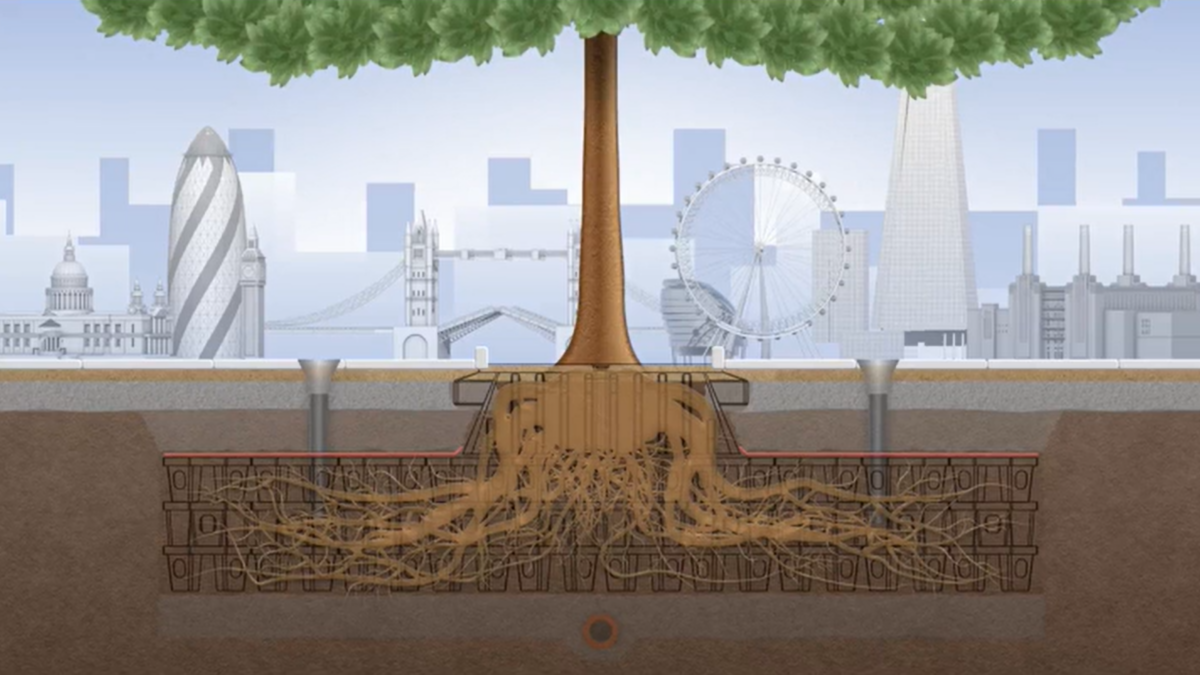
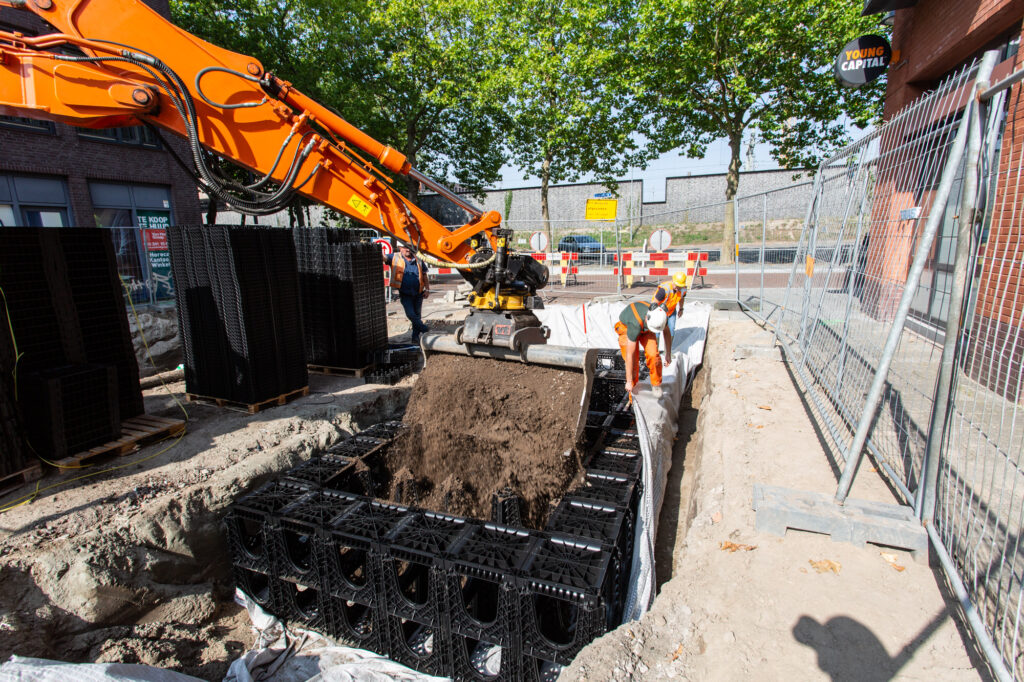
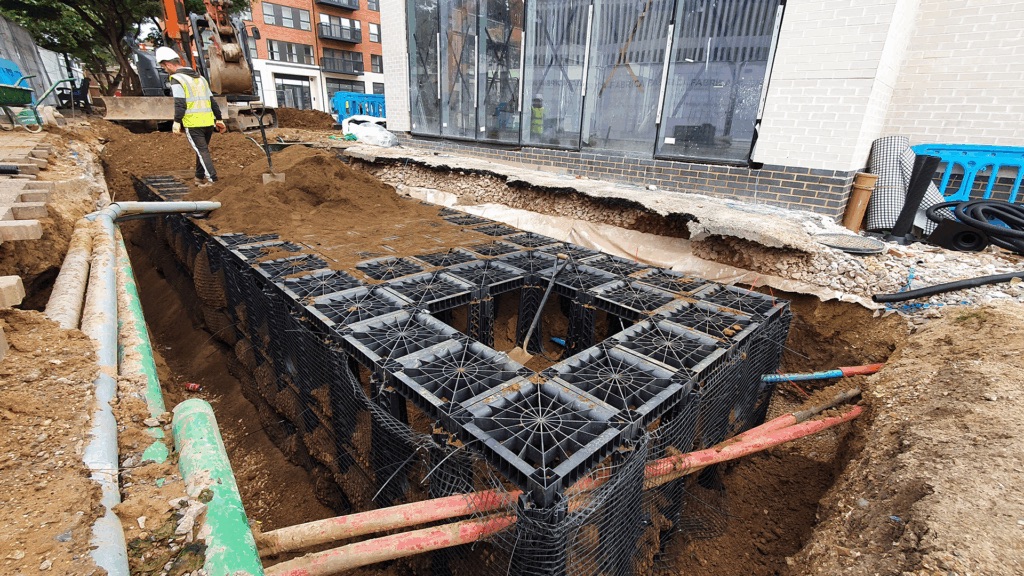
In well‑designed soil cell systems like RootSpace:
- Structural elements occupy a small fraction of the total soil volume
- Openings allow both radial and longitudinal root movement
- Roots encountering a strut simply redirect into adjacent soil volumes
- Any individual constraint is over‑compensated by growth elsewhere
There is no mechanism by which a lattice opening can reproduce the continuous, circumferential pressure required to create a true stem girdling root. In fact, by increasing total soil volume and reducing compaction, soil cells address the primary site drivers that contribute to girdling in the first place.
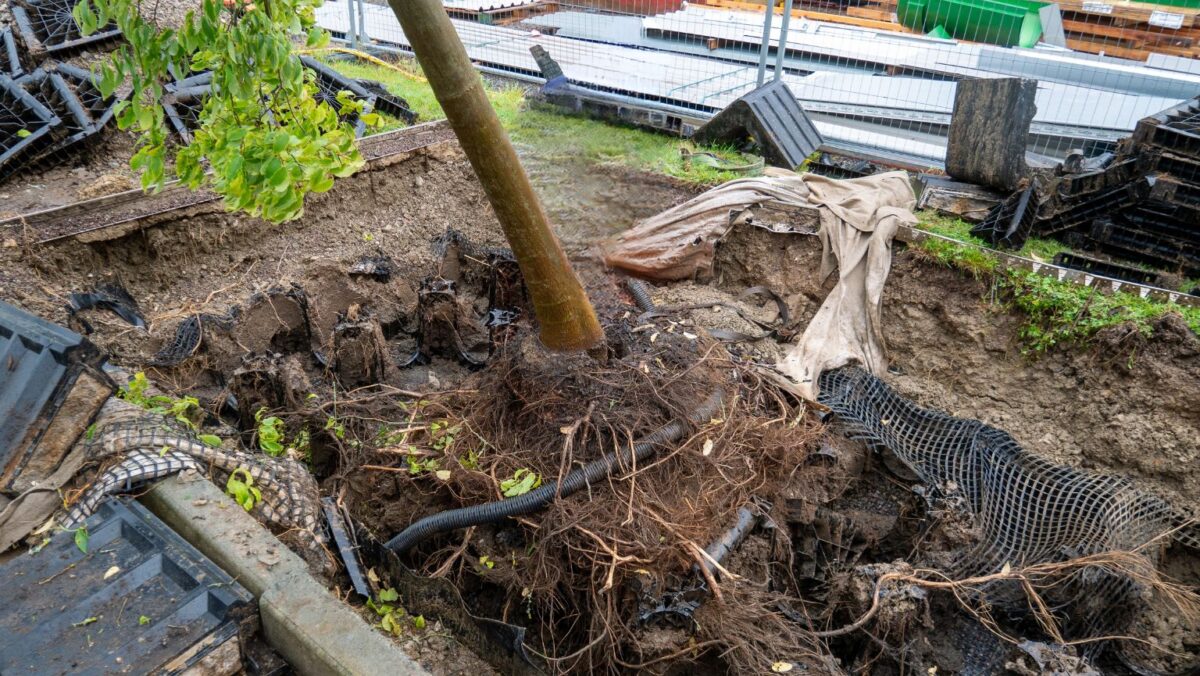
RootSpace, planting quality and risk reduction
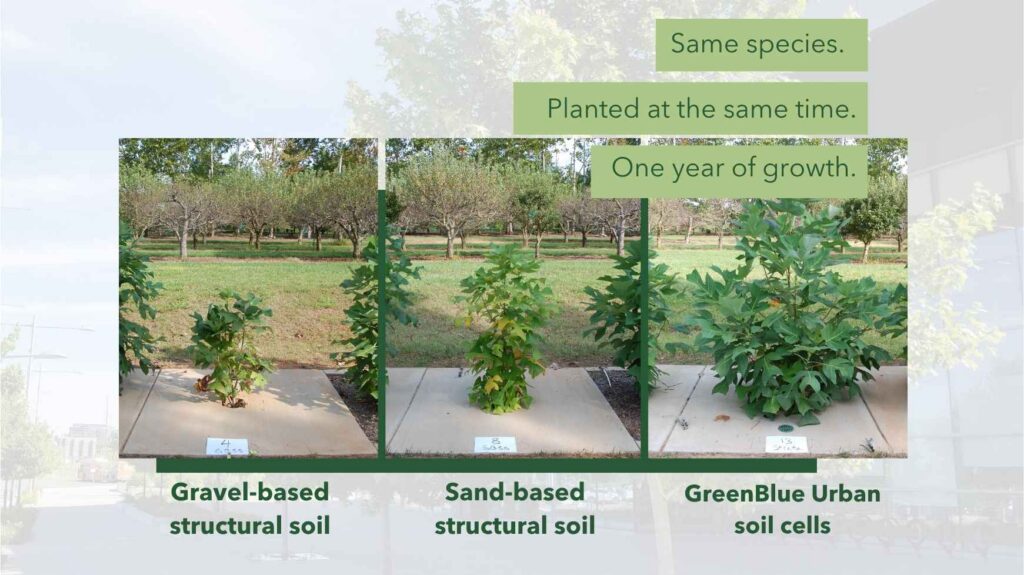
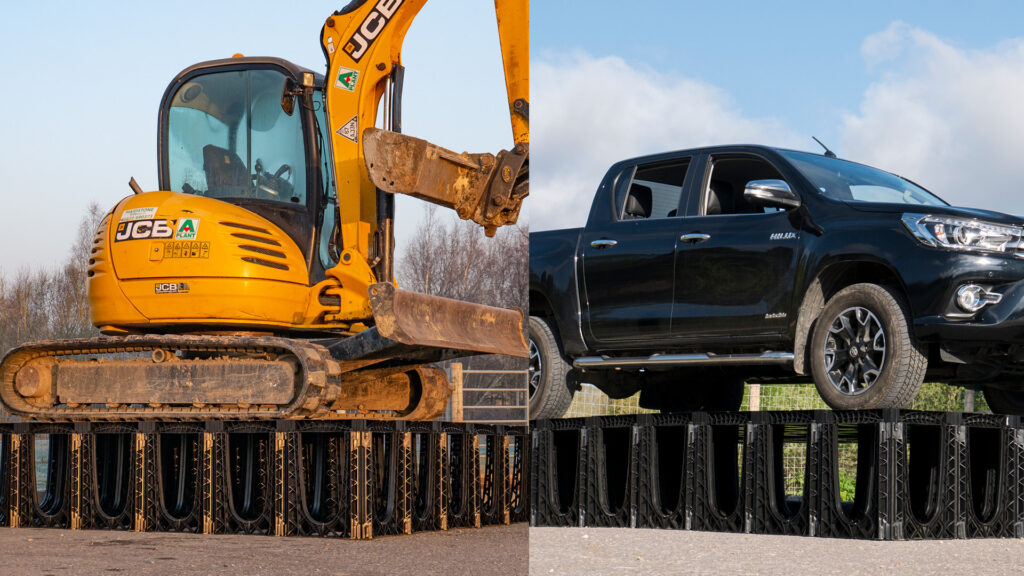
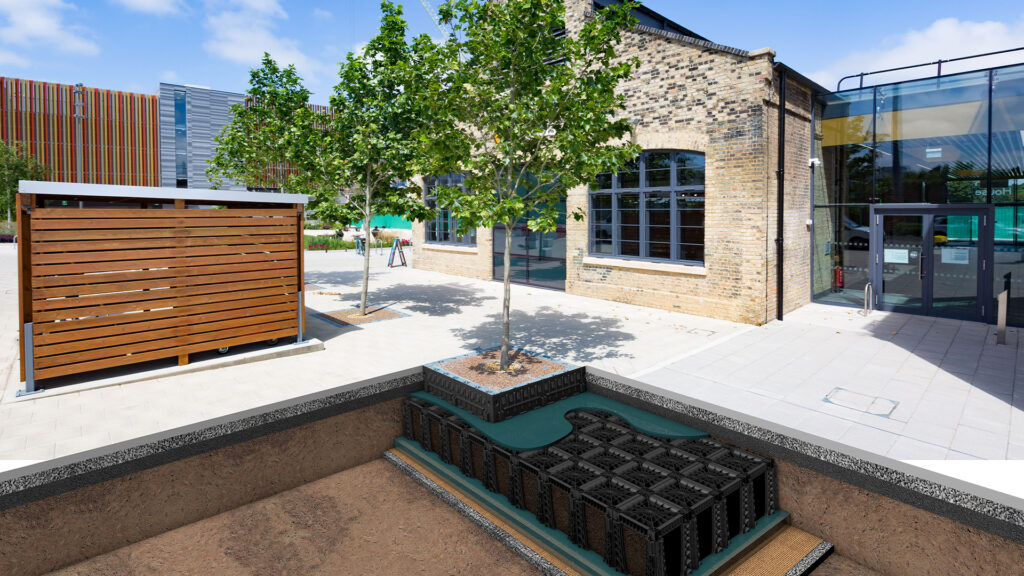
RootSpace soil cells are designed to provide large volumes of uncompacted, connected soil beneath pavements while supporting structural loads. From a root development perspective, this shifts conditions decisively away from those associated with girdling risk.
Used as intended – and combined with good planting practice – RootSpace:
- Encourages radial, outward root growth
- Reduces reliance on tangential growth near the trunk
- Improves oxygen availability and moisture movement
- Supports continuous root regeneration and compensation
Where RootDirector components are used as part of the system, ribbed guidance surfaces further discourage circular root paths near the stem, reinforcing correct root architecture during establishment.
As with any urban tree installation, outcomes depend on fundamentals: correcting circling roots at planting, planting at the correct depth with the root flare visible, and specifying appropriate soil quality. Soil cells do not override poor practice, but they significantly reduce the structural and environmental conditions that lead to failure.
The bottom line
Root girdling is real, serious, and worth avoiding. But it is also specific. It is most strongly linked to early root training, planting depth, and confined, compacted soils – not to occasional root contact with structural elements in open, well‑connected systems.
In urban environments where adequate soil volume and connectivity are provided, trees respond as they always have: by redirecting growth, regenerating fine roots, and exploiting available space. Localized constriction is biologically insignificant in this context.
From a risk perspective, soil cell systems don’t introduce a new failure mode, they actually reduce the likelihood of the dominant ones – and, in doing so, support healthier, more stable trees over the long term.