UK construction sector insiders have been paying close attention to government announcements over the past week or so – there have been quite a number of them – and preparing to ramp up as a result. From the new homes target of 1.5 million by 2029, to the New Hospital Programme, via National Planning Policy Framework reforms and the announcement of the fact that 100 sites are being considered for new towns, there have been clear signals that the building industry will be shortly heading into a period of expansion.
Indeed, Glenigan’s latest Construction Industry Forecast 2025-2026 predicts growth, while other insights confirm that the industry is more galvanized than ever, with private and local authority development planning applications seeing an uptick.
Yet the key challenge remains: land.

Turning challenge into opportunities
Across the UK, we face the complexity of maximising land use to ensure commercial viability, while at the same time mitigating flood risk – which is growing because of climate change – and meeting increasingly demanding biodiversity net gain (BNG) legislation requirements. The reality is that traditional attenuation basins can take up unnecessarily large amounts of valuable land, if they are used as a simplistic solution to controlling the impact of high intensity rainfall events – plus they can become unsightly features, that are either dry or stagnant, because no emphasis has been put on planting or how the basins integrate into a SuDS in a way that supports the ecological value of the land.
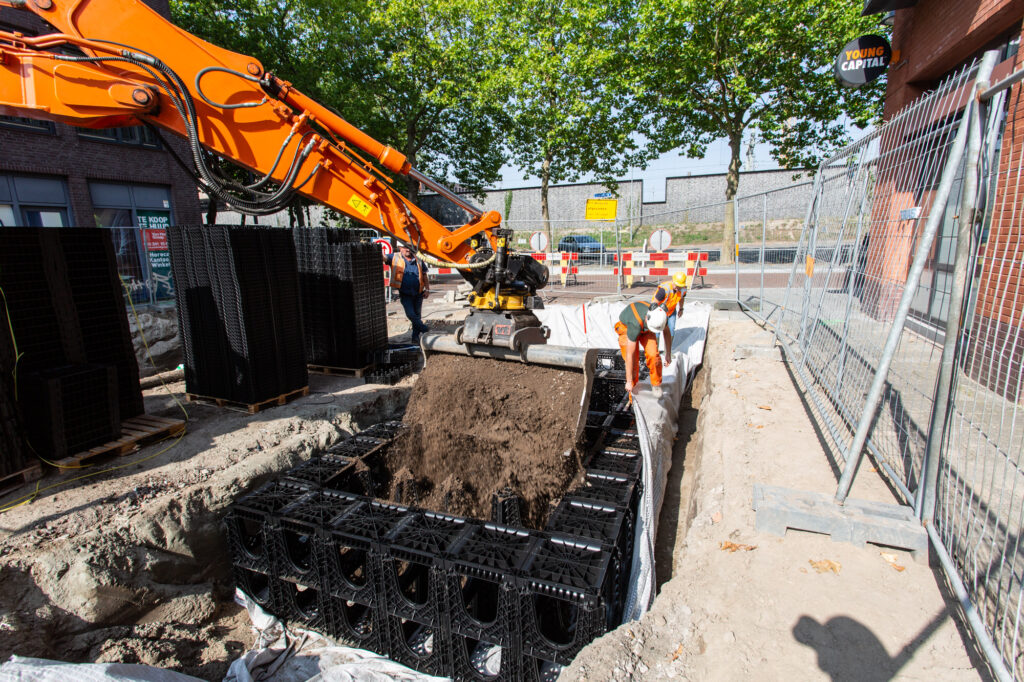
Additionally, some other SuDS components, such as soakaway crates, fail to contribute to the urban environment in any meaningful way, while underground storage tanks also fail to provide additional ecological or social value in themselves. They do not support biodiversity, do not enhance the green spaces for residents, and require significant maintenance over time. Simply put, they are a wasted opportunity. As we seek to create resilient, sustainable and attractive urban developments, a paradigm shift is needed: we must design SuDS better, not just to achieve the flood water management objective, but to provide wider benefits to the environment and to our communities.
The green-blue commercial advantage
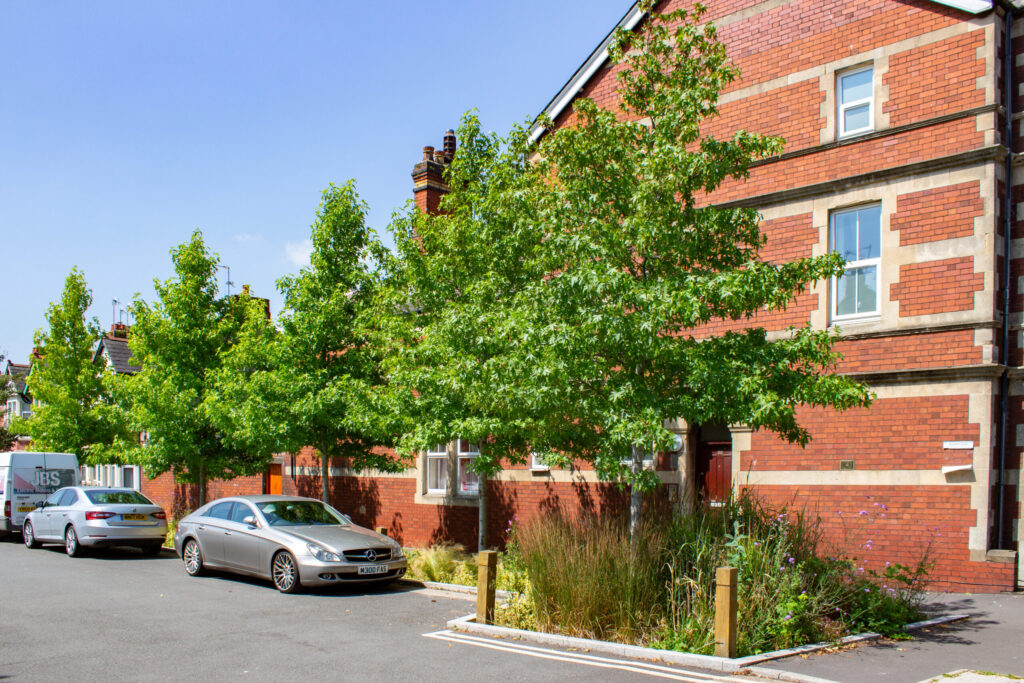
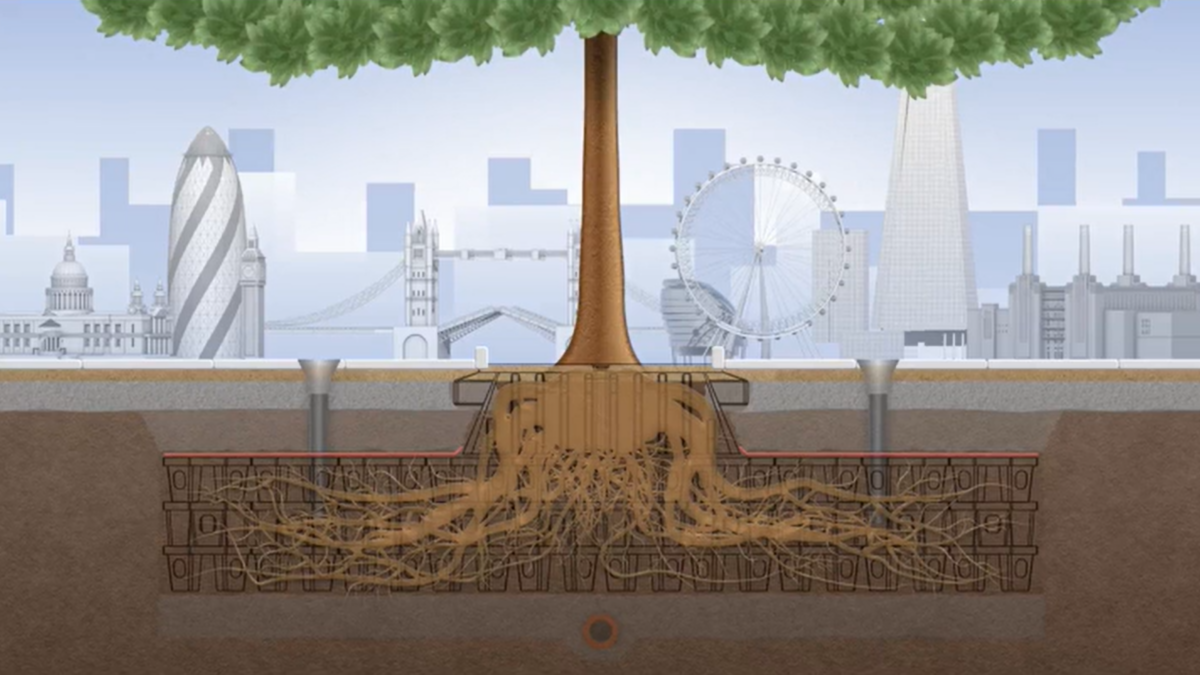
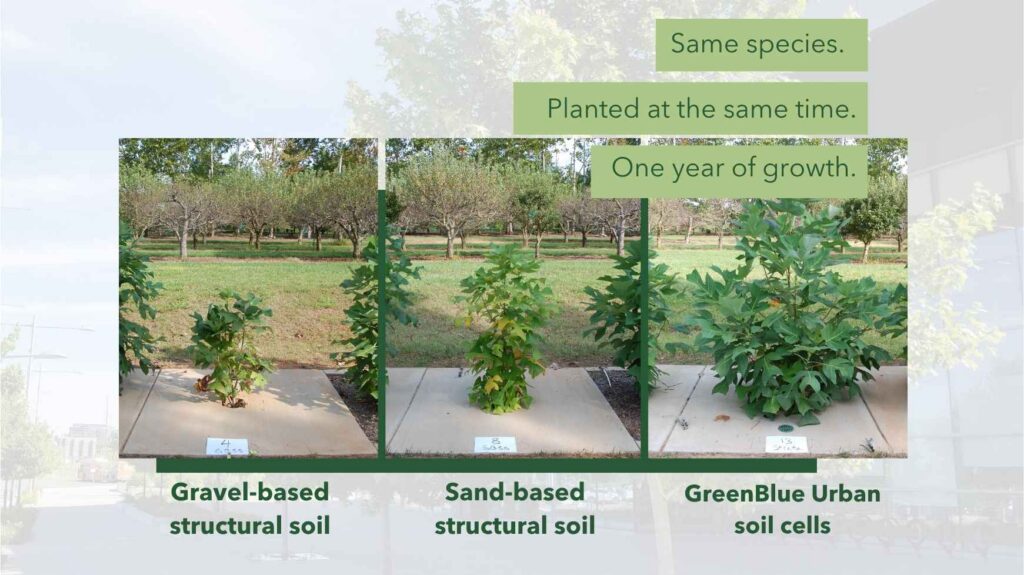
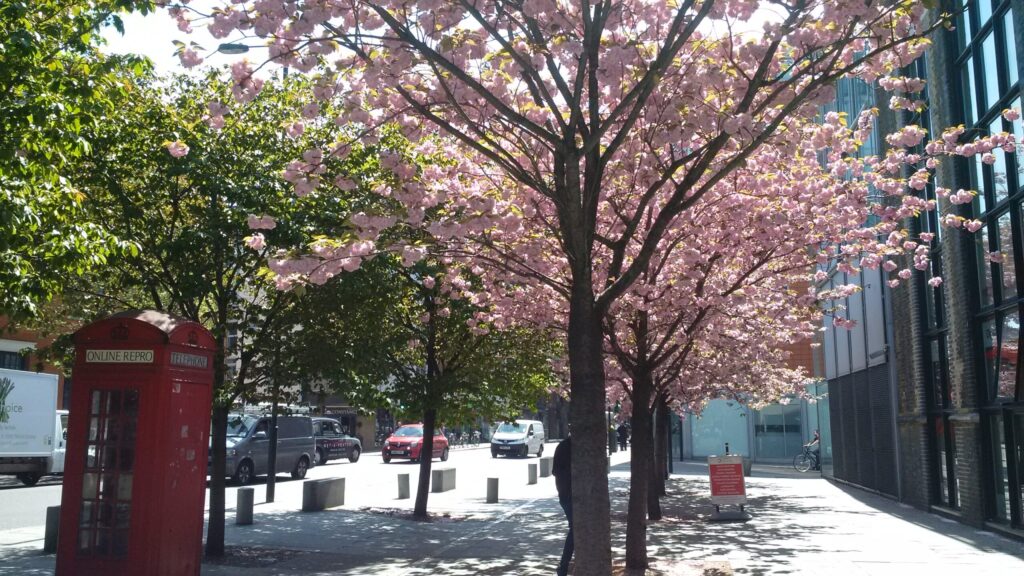
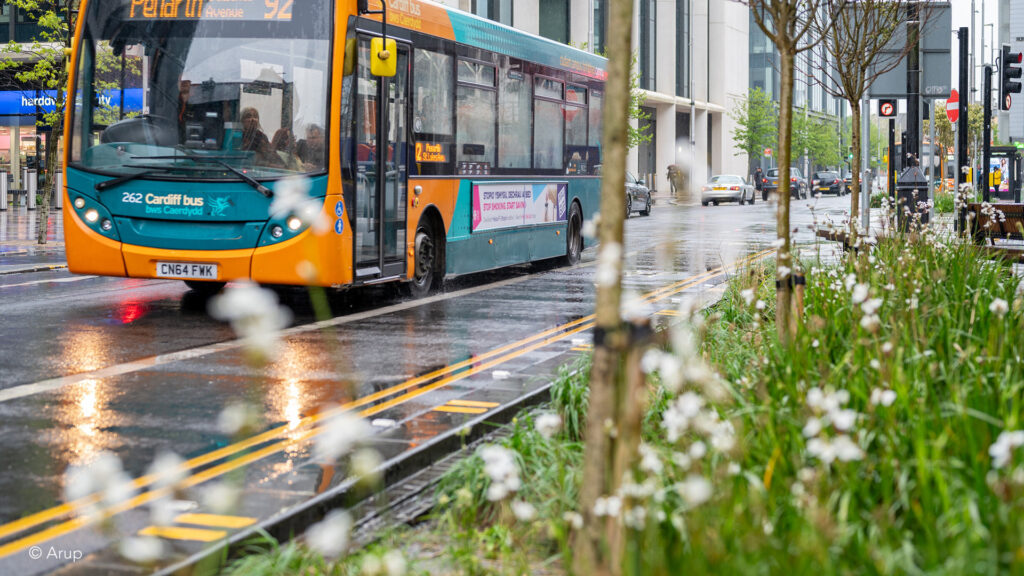
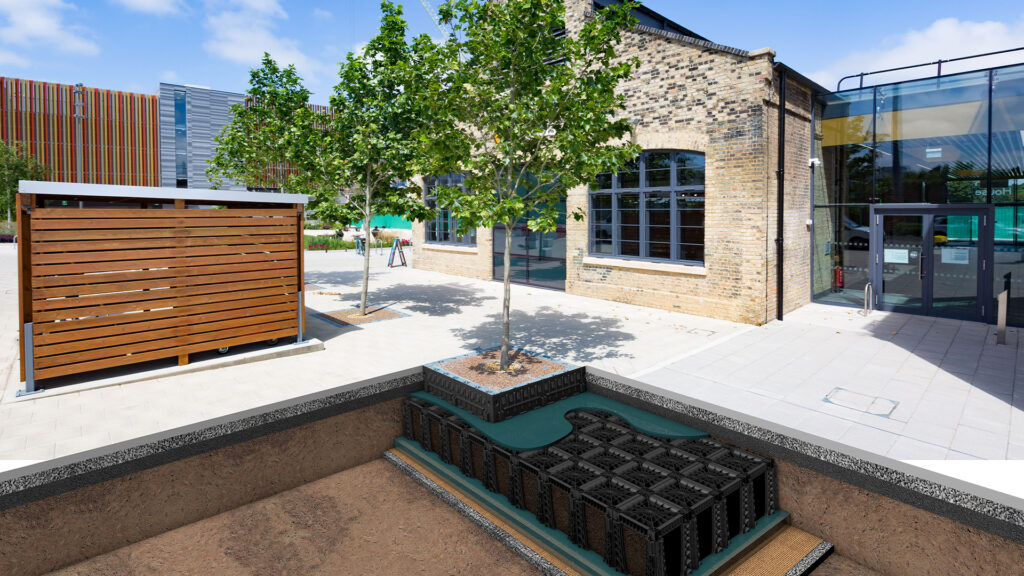
Green-blue infrastructure – sustainable drainage systems or SuDS features which incorporate the conditions for planting – integrates green space with sustainable water management, offering a multifunctional solution that enhances new developments in both practical and aesthetic ways. SuDS of this nature improve water quality, reduce flood risk, support biodiversity, and create sustainable, low-maintenance developments that align with modern urban planning goals.
But it’s not only about making the right choices for environmental reasons; there need be no compromises, it’s actually a win-win. By combining ‘green’ tactics such as tree planting and raingardens with the ‘blue’ method of sub-surface water management, developments can achieve multiple benefits that support commercial objectives:
- Increased developable space
Reducing the need for, or size of, large attenuation basins and inefficient drainage tanks frees up land, ensuring more capacity for housing, retail and public spaces, and better flexibility of siting.
- Enhanced aesthetic, wellbeing and buyer appeal benefits
Well-designed green spaces contribute to homebuyer appeal and higher property values, by promoting biodiversity and healthier environments which increase liveability and desirability. - Biodiversity net gain compliance
Leaving habitats in a measurably better state than before development has now been mandatory for a year, but the new way of thinking required to create on-site gains is still embedding itself in practice. Green-blue SuDS help to make biodiversity net gain (BNG) compliance an easy win. - Improved planning outcomes
Many local authorities require developments to align with sustainability goals, incorporating natural solutions to address flood risks and ecological challenges; some planning departments will require more emphasis on environment, biodiversity and community wellbeing than others.

It’s also not only residential developments that can be augmented by green-blue SuDS, the benefits of green-blue infrastructure extend to commercial projects and major infrastructure schemes, too, including retail parks, office developments and transport hubs. In all kinds of urban setting, integrating sustainable drainage and green infrastructure helps create more sustainable and attractive environments, while ensuring commercial considerations are not compromised.
What’s key, though, is early attention to the design of the drainage infrastructure, and the development of a SuDS design that meets multiple environmental, practical and aesthetic objectives, rather than simply fulfilling the purpose of attenuating storm event flows. By considering the integration of green-blue solutions at the earliest stage, it’s not only possible to support BNG and SuDS goals more effectively, but through greater flexibility of options and the modelling of different scenarios, it’s more possible to control costs and optimise land value.
Of course, the SuDS design solution must be site-specific – some sites may be able to avoid using attenuation basins at all, through a drainage system design which is comprised of green-blue SuDS entirely; others will still require an attenuation basin to be in the mix, though when supported by smaller-scale green-blue features in greater numbers, it might be possible to minimise the size of the basin and reclaim buildable land as a result.
Collaborative, commercial and climate-resilient
The construction industry is at a crossroads. We can either continue down the path of inefficient land use and simplistic drainage solutions, or we can embrace the future – one where green-blue infrastructure unlocks land potential, enhances biodiversity and creates more resilient, appealing spaces, while also maximising commercial potential.
Key to success is going to be partnership working; industry-leading manufacturers like us are keen to work together with planners, policymakers, engineers, developers and contractors to support the best-practice implementation of effective green-blue solutions, offering full-service design and technical support to ensure optimal performance and land efficiency, delivering scalable and adaptable solutions that can be adapted for local application with minimal complexity.
To start a conversation about how we support the implementation of green-blue infrastructure to ensure land use efficiency and flexibility, supporting commercial considerations while also delivering climate resilience, wellbeing and biodiversity benefits, send a message to our expert team.
Sea, sand and SuDS
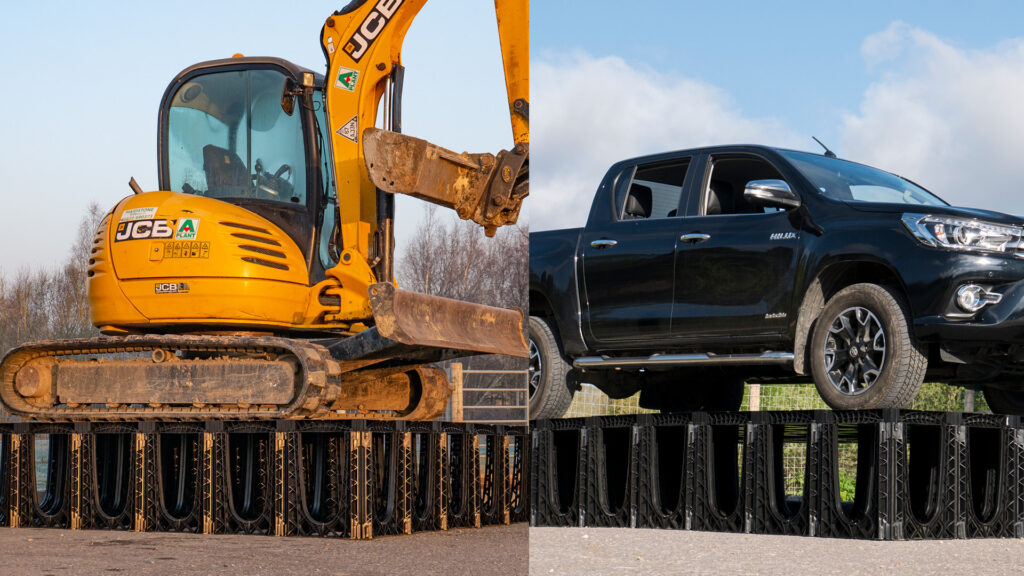
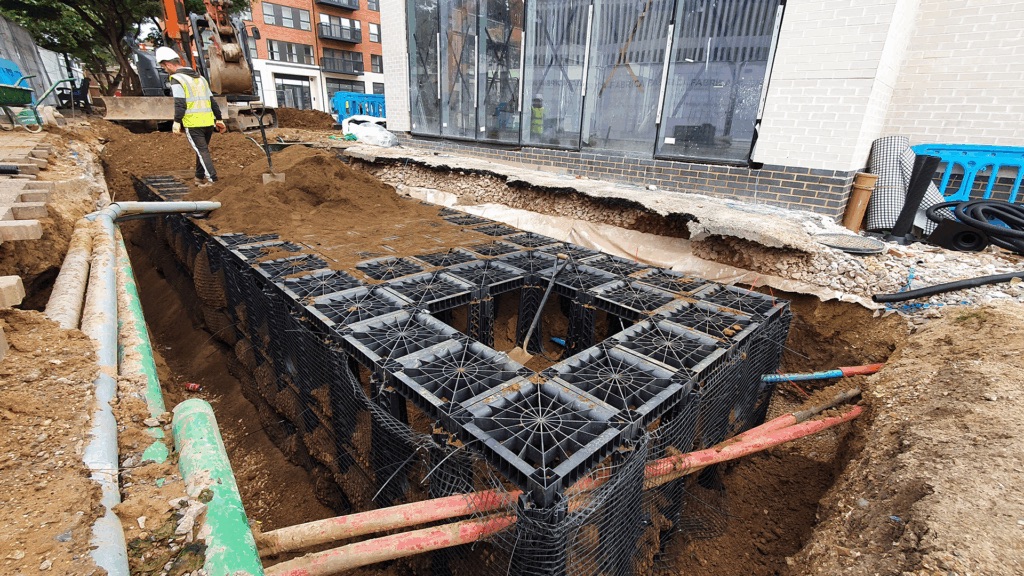
A recent project we undertook, less than two miles from the seafront in a coastal town in East Anglia, demonstrates how integrating green-blue infrastructure solutions allows for increased land use while enhancing the aesthetic and functional value of the site. By using sustainable drainage systems (SuDS) that combine the green of plantable areas and the blue of below-ground infrastructure, we were able to free up space – to enable flexibility of site planning – while meeting flood mitigation requirements without needing to include an attenuation basin, all through an easily installed plug-and-play system.