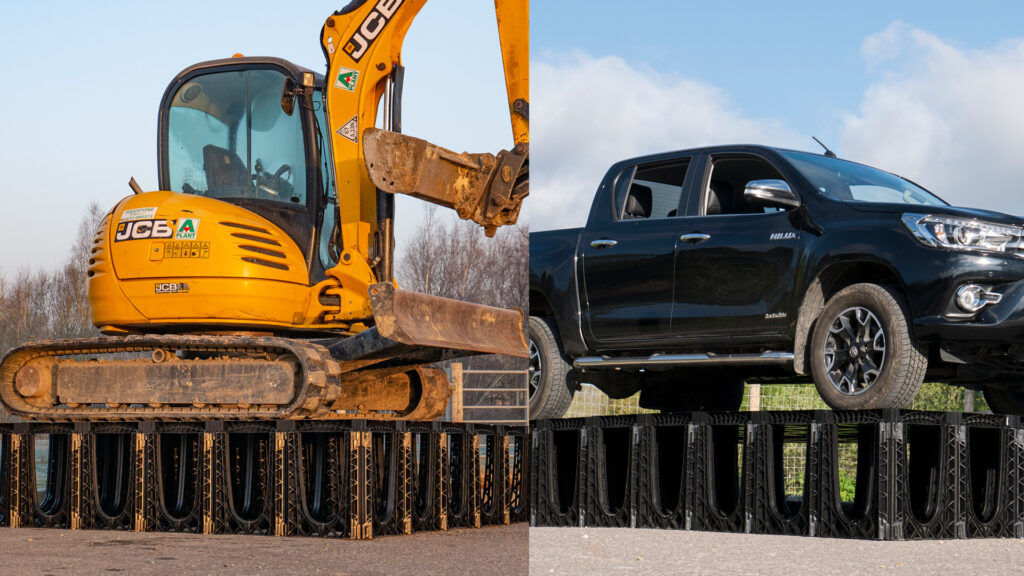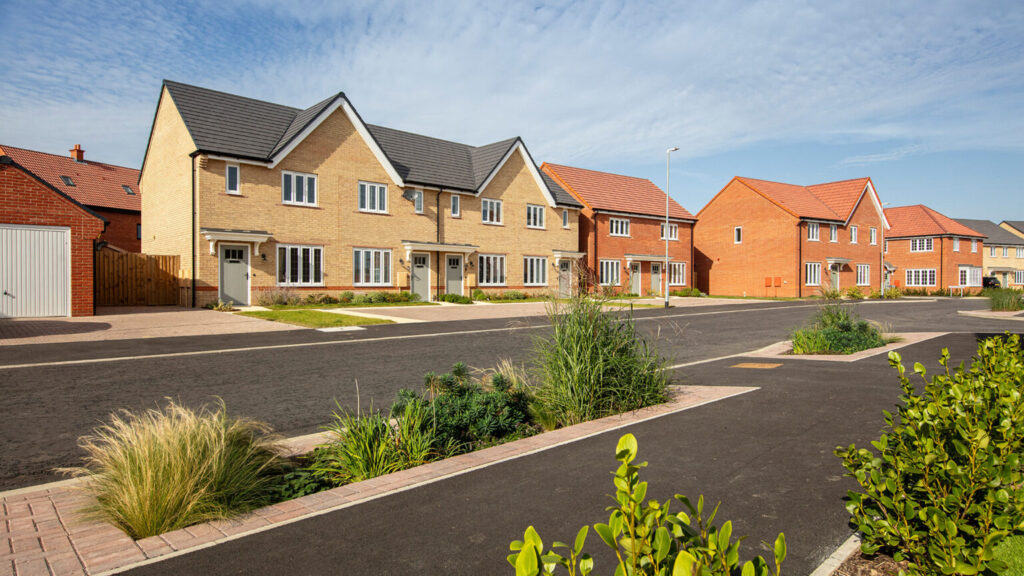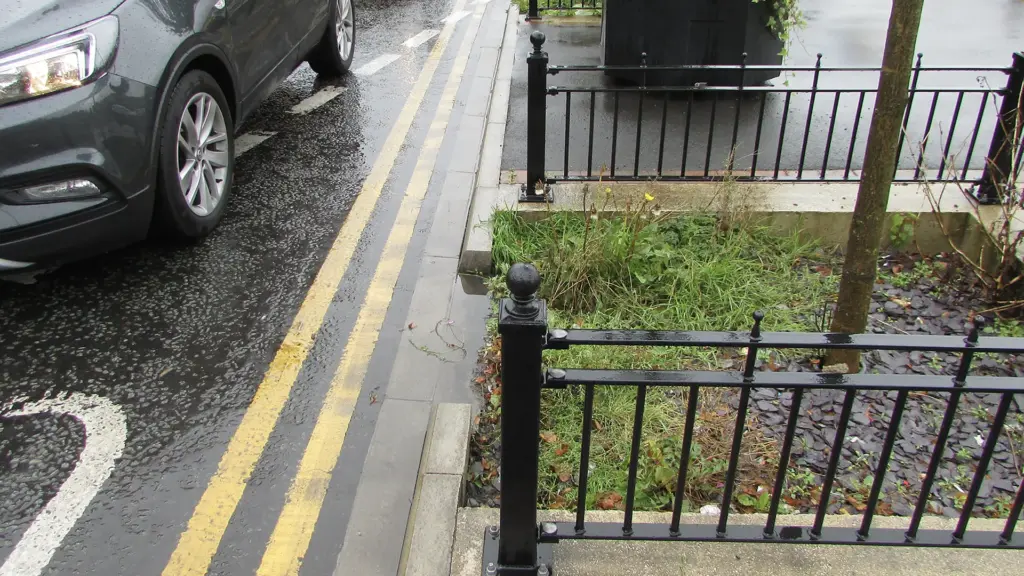
As part of GreenBlue Urban’s ongoing commitment to the further development of its products and solutions, the independent materials testing and analysis institute Lucideon was recently commissioned to investigate the structural properties of the RootSpace root chamber system.
For road construction engineers, resistance to vertical, lateral, and dynamic loads is of particular importance. For this purpose, Lucideon received RootSpace components, which were assembled into modules of various sizes.
The tests, conducted according to BS EN 17150, aimed to evaluate the structural integrity and load-bearing capacity of RootSpace® under different configurations and filling conditions. The results provide valuable insights into the performance of RootSpace® in urban infrastructure – including pavement load-bearing capacity, underground pipe systems, and storage chambers.
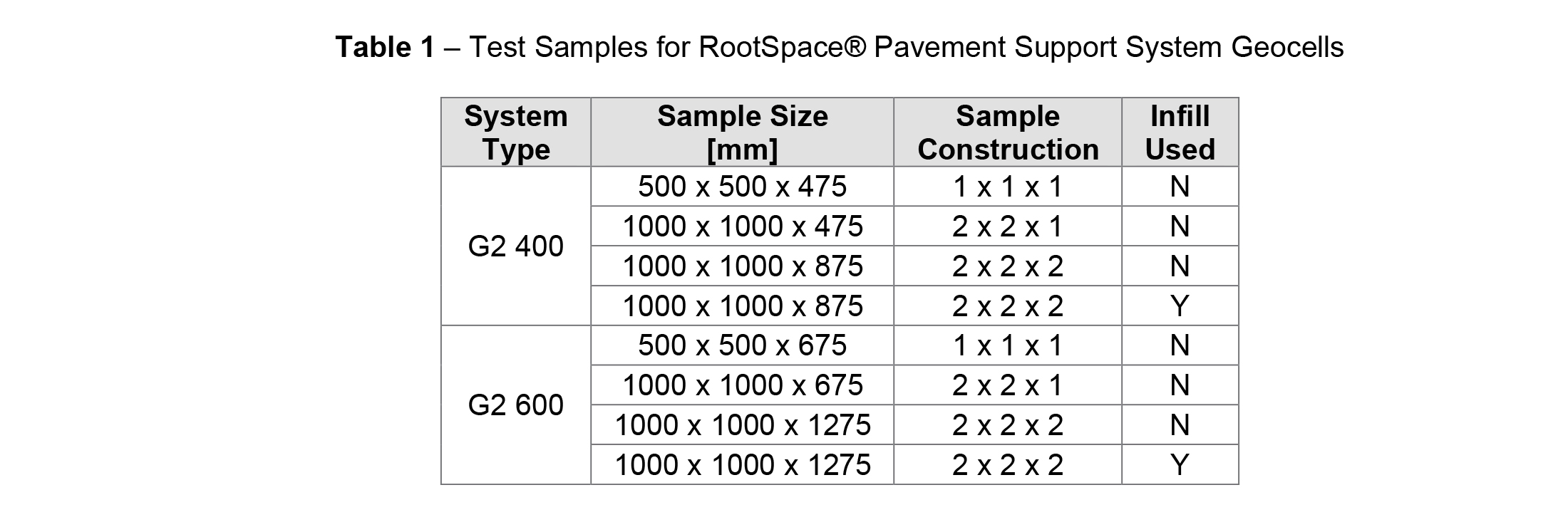
RootSpace® was tested in various configurations, as shown in Table 1. The test specimens, constructed by Lucideon’s engineers, included different series (600 and 400) with varying heights, lengths, and widths. In some cases, infill panels were also included to investigate their influence on structural performance. Each specimen was subjected to a uniformly distributed load (UDL) test to determine compressive strength and deflection behavior.
Test program and methodology
The testing program involved conditioning all samples in air at the test temperature for at least 24 hours. Subsequently, each sample was subjected to a uniformly increasing pressure load using a servo-assisted hydraulic testing machine, with load and deflection values continuously monitored.
Prior to the actual test, a preload was applied for 5 minutes to stabilize the specimen. Afterwards, the load was applied until failure at a constant loading rate of 0.5 kN/m²/s, according to Method A of standard BS EN 17150:2019.
Results and analysis
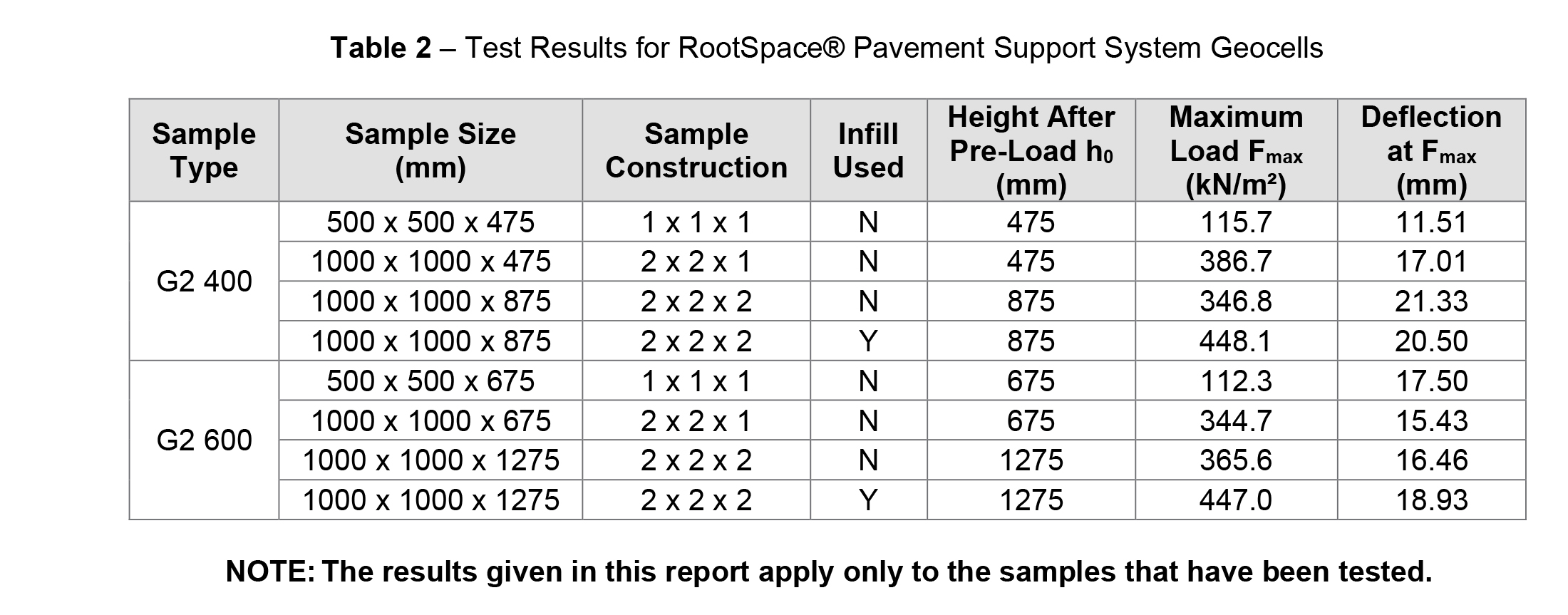
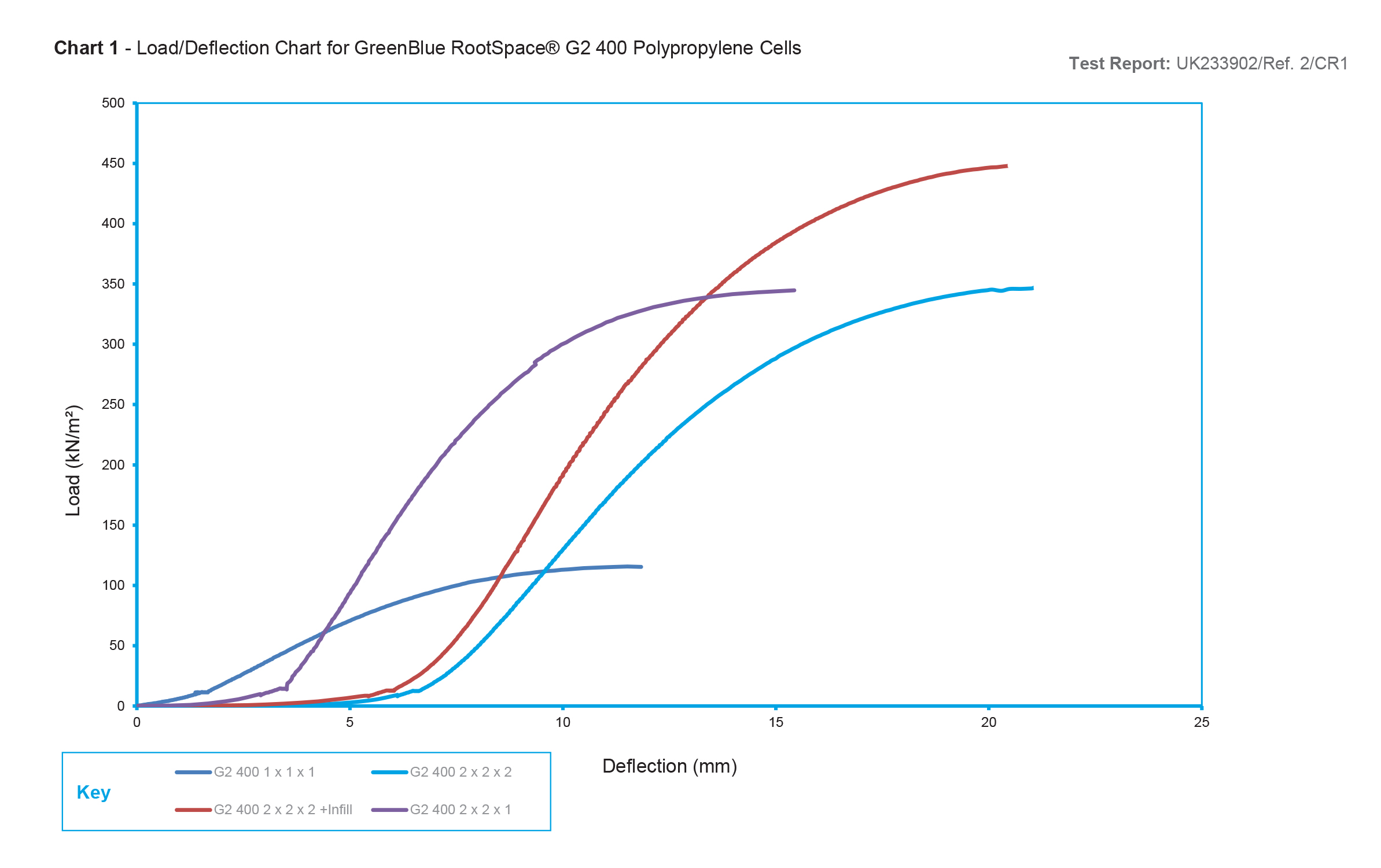
The results presented in Table 2 and Diagram 2 provide information about the behavior of RootSpace® under different configurations and filling conditions. Differences in the maximum load (Fmax) and deflection at maximum load illustrate the influence of the standard design and infill panels on structural integrity and load-bearing capacity.
Load-deflection and load-time diagrams also show the behavior of RootSpace® under compressive loading and provide valuable data for the planning and design of urban infrastructure.
Comparison with previous tests
In addition to pressure tests on RootSpace®, Lucideon conducted further tests to determine the short-term compressive strength of the empty modules for use in underground piping systems and non-potable water storage chambers. The results demonstrate the robust design and high compressive strength of RootSpace® in various applications.
The observed differences in maximum load and deflection provide further evidence of the structural performance of RootSpace® in various urban scenarios and confirm the system’s versatility and efficiency in improving urban infrastructure.
Lucideon’s comprehensive evaluation of RootSpace® underscores its effectiveness in optimizing urban infrastructure. The test results demonstrate RootSpace®’s structural integrity, load-bearing capacity, and versatility in a wide range of urban applications. Of particular note is its lateral load-bearing capacity, which proved to be class-leading – the installed system exhibited exceptional resistance to lateral forces.
Sustainability and certification
RootSpace® is the only BBA-certified root chamber system in the United Kingdom. The tests are based on the use of high-quality, UK-sourced recycled materials that can be recycled more than five times.
With product-specific life cycle assessments (LCAs) and the continuous reduction of the company-wide CO₂ footprint, GreenBlue Urban sets standards compared to other providers on the British market.
As our cities and communities evolve, innovations like RootSpace® play a crucial role in building resilient, sustainable and efficient urban environments.